Wired Out: How the Digital Divide Is Draining Life from Montana's Rural Communities
Wired Out: How the Digital Divide Is Draining Life from Montana's Rural Communities
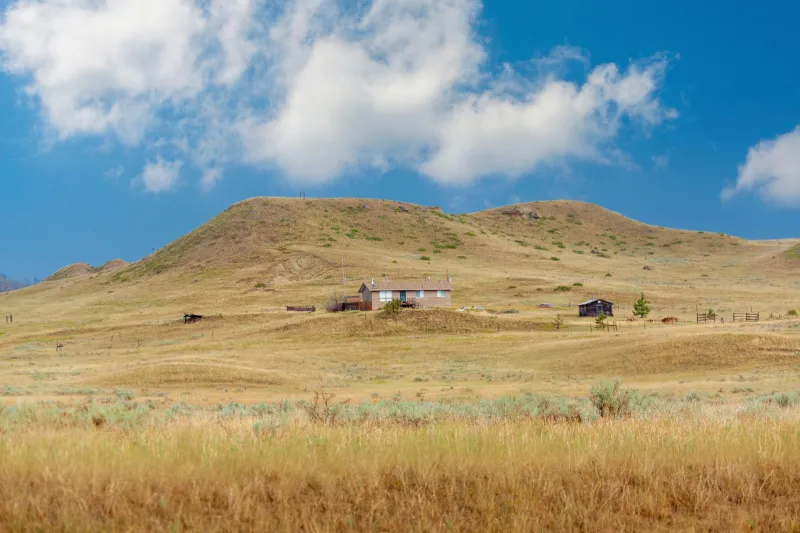
On a gravel road outside Winnett, where the nearest stoplight is an hour's drive in any direction, rancher Dale Kueffler completes his quarterly tax filings the same way he has for the past six years — hunched over a laptop tethered to a satellite dish bolted to his barn roof. On a clear day, the connection holds. On a windy one, it drops mid-submission, and he starts over.
"People in Billings think this is a minor inconvenience," Kueffler said. "It isn't. It's a workday. Sometimes it's two."
His situation is not an outlier. Across Montana — a state roughly the size of Germany with a population smaller than Rhode Island's — hundreds of thousands of residents remain without access to broadband service that meets even the federal government's minimum definition of high-speed internet. The consequences extend well beyond slow streaming speeds. Businesses are closing. Elderly residents are becoming isolated. And young families, unwilling to raise children in communities that feel increasingly cut off from the modern economy, are leaving.
The Scope of the Problem
The Federal Communications Commission defines broadband as service delivering at least 25 megabits per second for downloads and 3 megabits per second for uploads. By that standard, the FCC's own maps — long criticized for overstating rural coverage — still show Montana ranking among the least-connected states in the nation. Independent analyses suggest the gap is considerably wider than official figures acknowledge.
Montana's geography is a significant obstacle. Stringing fiber-optic cable across mountain passes, river breaks, and hundreds of miles of open rangeland carries costs that private providers consistently deem unprofitable. The business case simply does not pencil out when a single mile of rural fiber installation can cost upward of $30,000 and serve only a handful of customers.
But geography alone does not explain the failure. Advocates and local officials point to a more complicated story — one involving bureaucratic delays, overlapping federal programs with conflicting requirements, and a pattern of private providers claiming coverage areas they do not meaningfully serve.
Federal Money, Local Frustration
The federal government has directed billions of dollars toward rural broadband expansion in recent years, including substantial allocations through the Infrastructure Investment and Jobs Act passed in 2021. Montana is positioned to receive hundreds of millions of those dollars through the Broadband Equity, Access, and Deployment program, known as BEAD.
Yet local officials and tribal administrators say the path from federal appropriation to functioning internet service is rarely straightforward.
"Every program comes with its own application process, its own reporting requirements, its own definition of what counts as underserved," said one county commissioner in eastern Montana who asked not to be named while federal applications remain pending. "You spend more time chasing the money than you do building anything."
A recurring frustration is the challenge of accurate mapping. Internet service providers are required to submit coverage data to the FCC, but those submissions are self-reported and subject to minimal verification. In some Montana counties, providers have claimed service in census blocks where residents report receiving no usable signal at any price. Until those inaccuracies are corrected — a process that requires residents and local governments to formally challenge provider claims — federal funding cannot flow to areas that need it most.
Tribal Nations Charting Their Own Course
Facing chronic underservice from commercial providers, several of Montana's tribal nations have moved to build their own broadband infrastructure. The Fort Peck Assiniboine and Sioux Tribes and the Confederated Salish and Kootenai Tribes have both pursued independent telecommunications initiatives, leveraging a combination of federal tribal broadband grants and partnerships with regional cooperatives.
The results have been uneven but instructive. Where tribal-led projects have succeeded, they have demonstrated that community-owned infrastructure — rather than reliance on commercial carriers — may offer the most durable path to connectivity in remote areas.
"When you own the network, you control the priorities," said a broadband coordinator working with a tribal telecommunications office in northern Montana. "Commercial providers will always serve the customers who generate the most revenue. That is not going to be a reservation on the Hi-Line."
Advocates argue that the tribal model deserves far greater support and replication across rural Montana, including in non-tribal communities where local cooperatives and public utilities could theoretically assume similar roles.
The Human Cost
Behind the policy debates are consequences that are difficult to quantify but impossible to ignore.
In Petroleum County — the least populous county in the contiguous United States — the local school district has grappled for years with students who cannot complete online assignments at home. During the height of the COVID-19 pandemic, when schools shifted to remote instruction, the situation became acute. Some families drove their children to the nearest town with a public Wi-Fi signal — in some cases, a fast-food restaurant parking lot — and sat in their vehicles while homework was downloaded.
That image has since become something of a symbol for connectivity advocates across the state. It is also, several educators note, still happening.
"We act like this was a pandemic problem that got solved," said one rural school administrator. "The pandemic just made it visible to people who weren't paying attention."
For older residents, the consequences carry a different weight. Telehealth — remote medical consultations conducted by video — has emerged as a critical tool for rural health systems struggling with provider shortages and long travel distances. But telehealth requires broadband. Residents without it cannot access the service, deepening an already serious healthcare access crisis in communities where the nearest specialist may be three hours away.
Small business owners describe a quieter erosion. The inability to process credit card transactions reliably, to maintain a functional website, or to participate in e-commerce platforms has placed rural Montana entrepreneurs at a structural disadvantage that compounds year over year.
A Solvable Problem?
Opinions differ sharply on whether Montana's broadband crisis is a fixable policy failure or a permanent feature of low-density rural geography.
Optimists point to the BEAD funding pipeline, improved satellite internet technology from commercial providers like SpaceX's Starlink, and growing political will at both the state and federal level. Montana's congressional delegation has been notably active in pushing for rural broadband investment, and the state's broadband office has worked to accelerate the mapping challenge process.
Skeptics are less convinced. They note that Starlink, while a meaningful improvement for some households, carries monthly costs that are prohibitive for low-income rural families and remains subject to weather-related service interruptions. Federal funding, however substantial in aggregate, is unlikely to reach every unserved household in a state this large. And the history of rural broadband promises in Montana is not an encouraging one.
What seems clear is that incremental progress has not kept pace with the urgency of the problem. Communities that cannot attract remote workers, support functional businesses, or retain young families because of inadequate internet are not simply inconvenienced — they are shrinking. And in a state where small towns are already fighting to survive, connectivity is not a luxury. It is the infrastructure on which everything else depends.
For Dale Kueffler, sitting beside his satellite dish outside Winnett, the policy debates feel distant. He just wants to file his taxes without losing his connection on a windy afternoon.
"I'm not asking for fiber to every fence post," he said. "I'm asking for something that works. That's all."
Montana's News continues to track the state's broadband funding pipeline and the progress of federal mapping challenges filed by local governments. Tips and community accounts can be submitted through our website.