Smoke, Silence, and a Fading Watch: Montana's Fire Lookout Towers Stand at the Edge of History
Smoke, Silence, and a Fading Watch: Montana's Fire Lookout Towers Stand at the Edge of History
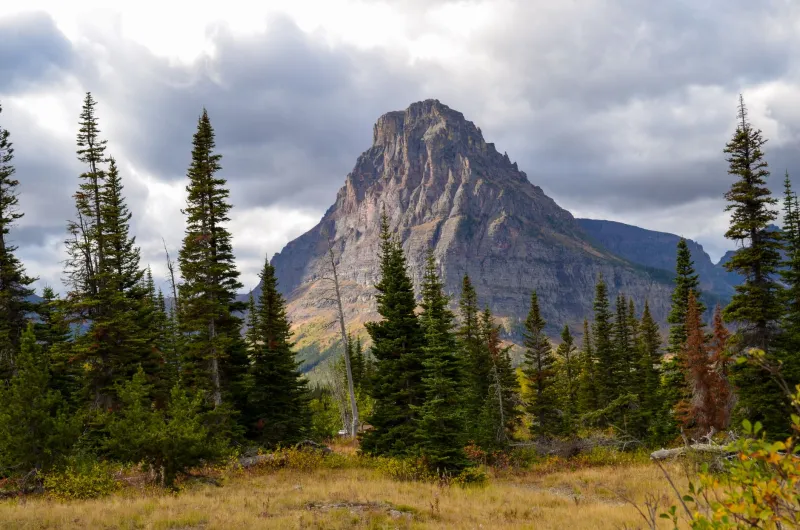
On a clear July morning, from an elevation just shy of eight thousand feet, the Bitterroot Valley unfolds below like a relief map pressed flat by God's own hand. The timber stretches in every direction — lodgepole and ponderosa, spruce and fir — and somewhere out there, on a morning like this, a column of smoke the diameter of a dinner plate can mean the difference between a contained burn and a hundred thousand acres lost.
For most of the twentieth century, a trained human being sat inside a small glass-walled cab at the top of a steel tower to watch for exactly that column. Today, fewer than two dozen staffed fire lookout towers remain operational across Montana's national forests. A generation ago, there were hundreds.
A Century of Vigil
The United States Forest Service began constructing lookout towers in earnest during the 1910s, spurred in large part by the catastrophic fires of 1910 — known simply as "the Big Blowup" — that scorched more than three million acres across Idaho and Montana and killed at least 85 people. The response from federal land managers was immediate and decisive: put human eyes on every ridgeline that mattered.
By the mid-twentieth century, Montana alone supported more than 900 staffed lookouts. The men and women who took those posts lived alone for entire fire seasons, sometimes four or five months at a stretch, subsisting on supplies packed in by mule and communicating with ranger stations via hand-cranked radio. The work demanded patience, precision, and an intimate familiarity with the land.
"You learn the country the way you learn a face," said one retired lookout who spent eleven summers atop a tower in the Flathead National Forest. "After a few weeks, you know every drainage, every ridgeline. You know what smoke looks like when it belongs there and what it looks like when something is wrong."
That kind of knowledge — embodied, accumulated, and irreducibly human — is precisely what critics of the modernization push say cannot be replicated by software.
The Budget Ax and the Algorithm
The decline of Montana's staffed lookout program did not happen overnight. Budget pressures on the Forest Service began mounting through the 1980s and accelerated in subsequent decades as firefighting costs consumed an ever-larger share of the agency's overall budget. Staffing a remote lookout for a full season — accounting for wages, supply logistics, and facility maintenance — can cost tens of thousands of dollars per tower. When administrators are forced to make difficult choices, solitary watchmen on mountaintops become an easy target.
At the same time, technological alternatives have grown more sophisticated and, on paper at least, more cost-effective. A network of remote camera systems, such as the ALERTWildfire platform already deployed across portions of the western United States, can monitor vast stretches of terrain continuously and flag potential smoke events for human review at a centralized station. Drone platforms capable of extended surveillance flights are advancing rapidly. Artificial intelligence tools trained to distinguish smoke from clouds or dust have improved markedly in recent years.
Forest Service officials, when pressed, tend to frame the shift carefully. The agency has not announced a formal policy of eliminating staffed lookouts, and spokespersons have emphasized that human observation remains part of an integrated detection system. But the numbers tell a quieter story: tower after tower has gone unstaffed in recent fire seasons, with no indication that the positions will be filled again.
What the Cameras Cannot See
Proponents of technological detection are not wrong about the capabilities of modern systems. Camera networks do not sleep, do not need resupply, and can simultaneously monitor terrain that would require dozens of human lookouts to cover. On those counts, the argument for modernization carries genuine weight.
But veteran lookouts — and some fire behavior analysts who have worked alongside them — point to a set of limitations that the technology's advocates tend to understate.
Smoke identification, for one, is more contextual than it might appear. A camera or an algorithm sees what is in the frame at a given moment. A seasoned lookout reads the landscape as a continuous narrative. The direction a column is leaning, the color it takes on as the morning heats up, the way it behaves relative to a drainage the watcher has observed for years — these are not data points that translate neatly into a detection algorithm.
"I've called in smokes that a camera would have missed entirely," said a former lookout who worked towers in the Lewis and Clark National Forest during the 1990s and early 2000s. "Because I knew that a certain kind of haze in a certain canyon at a certain time of day meant something was happening down there. That's not intuition. That's pattern recognition built over years."
There is also the question of communication. A staffed lookout is not merely a detection device. In the early, critical minutes after a smoke is spotted, a human observer can relay nuanced, real-time information to incoming air crews — wind shifts, terrain features, the behavior of the fire as it evolves. That kind of dynamic, interpretive reporting is something no current automated system reliably provides.
Cultural Loss on the Ridgeline
Beyond the operational debate, the disappearance of Montana's lookout towers represents a cultural and historical rupture that deserves its own reckoning.
Lookout towers are among the most recognizable symbols of Montana's relationship with its public lands. Many of the structures themselves are listed on the National Register of Historic Places. Some have been converted into rental cabins managed by the Forest Service, offering the public a rare chance to spend a night on a summit that once served as a sentinel post. These rentals have proven enormously popular — a sign, perhaps, of how powerfully the lookout tradition resonates with Montanans and visitors alike.
Writers, poets, and naturalists have long been drawn to the lookout experience. Jack Kerouac famously spent a summer on Desolation Peak in Washington state, an experience that shaped his writing. Gary Snyder worked lookouts in the North Cascades. In Montana, the tradition has its own literary and oral history, passed down through the communities that surrounded these towers and the families whose members staffed them across generations.
When a tower goes dark — when its windows are shuttered and its radio goes silent — something more than a monitoring station is lost. A particular way of knowing the land, of being present to it across long, quiet hours, vanishes with it.
An Uncertain Horizon
Advocates for the program have not surrendered. Conservation organizations, historical preservation groups, and former lookouts have lobbied Congress and the Forest Service to maintain staffing at a meaningful number of towers, arguing that a hybrid model — human observers supplemented by technology, rather than replaced by it — offers the best detection outcomes at acceptable cost.
Some legislators from Montana's congressional delegation have expressed support for preserving the program, though no significant new funding has materialized. Meanwhile, fire seasons grow longer and more severe with each passing decade, raising the stakes of every detection decision.
The irony is not lost on those who have spent their careers watching from the heights: at the precise moment when Montana's forests face their greatest fire risk in recorded history, the state is considering removing the most experienced watchers it has ever trained.
On that July morning in the Bitterroot, the old tower still stands. Whether anyone will be inside it next summer remains an open question — one that Montana's land managers, lawmakers, and residents may not be able to defer much longer.