White Gold or Fool's Gold? Montana Weighs the Promise and Peril of the Lithium Boom
White Gold or Fool's Gold? Montana Weighs the Promise and Peril of the Lithium Boom
For decades, the rusted headframes and tailings ponds scattered across southwestern Montana have stood as monuments to an industry that built the state and, in many places, left it scarred. Now, a new mineral rush is underway — quieter in its early stages but potentially far more transformative than the copper booms of the last century. Lithium, the soft silvery metal at the heart of every electric vehicle battery, has been discovered in commercially significant quantities across Montana's geological formations, and the investment dollars are beginning to flow.
The question that hangs over communities from the Bitterroot Valley to the Judith Basin is whether this moment represents a genuine economic turning point — or the opening act of a familiar story with a painful ending.
A State Sitting on a Battery
Geologists have long known that Montana's ancient rock formations hold substantial mineral wealth. What changed is the global economy. As automakers from Detroit to Stuttgart race to electrify their fleets and the Biden-era Inflation Reduction Act tied federal incentives to domestically sourced battery materials, the calculus around lithium shifted dramatically. Deposits that were considered marginal a decade ago are now drawing serious capital.
Exploratory drilling has accelerated across several Montana counties, and at least a handful of junior mining companies have filed claims on land that, until recently, attracted little commercial interest. State officials in Helena have taken note. Proponents within the Montana Department of Commerce have pointed to lithium development as a potential anchor for rural economic revitalization — a way to bring skilled jobs and tax revenue to counties that have watched their populations dwindle for a generation.
"This is the kind of opportunity that doesn't come around very often," said one economic development official who spoke on background, citing ongoing interagency discussions. "We have something the world needs, and we have a chance to do this right."
That phrase — do this right — carries enormous weight in Montana, where the legacy of doing it wrong remains visible and, in some cases, still toxic.
The Long Shadow of the Clark Fork
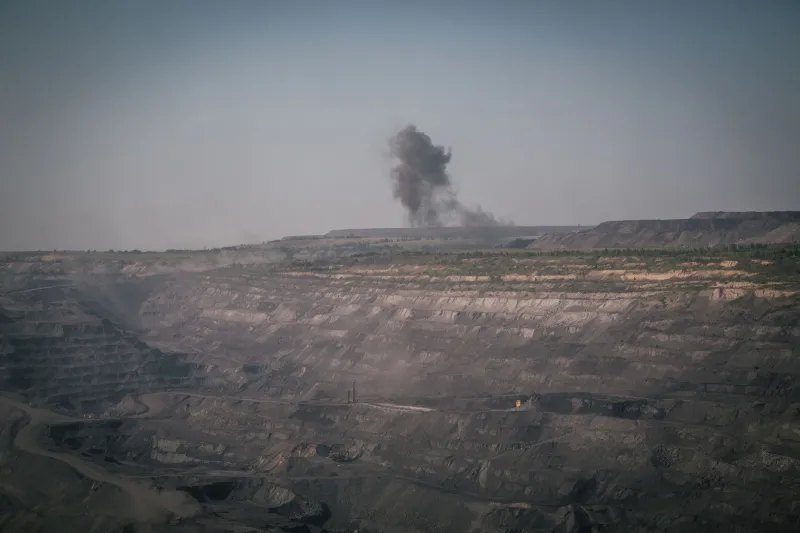
No conversation about mining in Montana can begin without acknowledging Butte and the Anaconda Copper Mining Company's century-long tenure, which produced immense wealth and the largest Superfund site in the continental United States. The Berkeley Pit, a mile-wide open-pit mine filled with acidic, heavy-metal-laden water, remains an enduring symbol of what unchecked extraction can leave behind. Cleanup costs have run into the billions, and the work is not finished.
Coal mining in the eastern part of the state carries its own complicated ledger. Communities built around the Colstrip power plant and its associated mines are now navigating a painful transition as utilities move away from coal, leaving behind both unemployment and reclamation obligations that remain contested.
These histories are not lost on the Montanans now watching lithium exploration expand across their counties. Environmental groups, including chapters of the Montana Environmental Information Center, have already begun tracking permit applications and pushing for stronger baseline environmental assessments before any large-scale extraction begins.
"We've seen this script," said one veteran environmental advocate based in Missoula. "The promises are always big, and the accountability always comes later — usually too late."
Tribal Nations at the Center of the Debate
Perhaps nowhere is the tension more acute than on and near the lands of Montana's tribal nations. The Blackfeet Nation, the Crow Tribe, the Fort Peck Assiniboine and Sioux Tribes, and others hold treaty rights and sovereign interests across vast stretches of the state — land that in some cases overlaps with or sits adjacent to lithium-bearing geological formations.
Federal consultation requirements under the National Historic Preservation Act and the National Environmental Policy Act obligate mining companies and federal agencies to engage tribal governments before approving projects that could affect culturally significant areas. In practice, tribal leaders say, that process is frequently inadequate.
"Consultation is not consent," said a tribal council representative from one of Montana's federally recognized nations, who asked not to be identified while negotiations with a mining company remain ongoing. "They come to our offices, they present their plans, and then they go ahead and do what they were going to do anyway."
The Biden administration's push to accelerate domestic critical mineral production has created a complicated dynamic for tribal communities that broadly support clean energy goals but are wary of bearing a disproportionate share of the extraction burden. Several tribal governments have retained legal counsel to review any agreements involving lithium development near reservation boundaries.
Jobs, Revenue, and the Fine Print
For rural Montana counties where median household incomes lag well behind state and national averages, the economic pitch for lithium mining is not easy to dismiss. Proponents point to the potential for hundreds of direct mining jobs, ancillary employment in logistics and services, and property and severance tax revenue that could fund schools and roads.
But economists who study resource-dependent communities urge caution about projections that treat peak employment figures as representative of long-term outcomes. Mining operations are capital-intensive and increasingly automated. Workforce numbers that look impressive during construction phases often contract sharply once a mine reaches steady-state production.
There is also the question of where the profits ultimately flow. Junior mining companies exploring Montana's lithium deposits are frequently incorporated in Canada or financed through international capital markets. The degree to which extraction wealth circulates within Montana communities — rather than being repatriated to distant shareholders — depends heavily on state tax policy and the structure of any royalty agreements.
State lawmakers have begun debating whether Montana's existing hard-rock mining tax framework, which critics argue undervalues the resource wealth being extracted, is adequate for the lithium era. Proposals to adjust royalty rates or establish a state sovereign wealth fund modeled on those in Alaska and Norway have circulated in Helena policy circles, though none has advanced to a floor vote.
A Framework for the Future
The decisions Montana makes in the next several years will shape the lithium industry's footprint in the state for decades. Environmental advocates are pushing for mandatory financial assurance — bonding requirements sufficient to cover full reclamation costs — before any mine breaks ground, citing the history of companies declaring bankruptcy and walking away from cleanup obligations.
Some industry representatives have signaled openness to stronger environmental standards, arguing that responsible development is ultimately in the industry's long-term interest. Whether that posture holds when it encounters the economics of a competitive global lithium market remains to be seen.
Tribal nations are seeking formal co-management agreements that would give them meaningful authority over projects affecting their treaty territories, rather than the consultative role that has historically proven insufficient.
And in communities across the state — in small-town diners and county commissioner meetings and tribal council chambers — Montanans are doing what they have always done when the outside world comes looking for something beneath their feet: weighing what they stand to gain against what they cannot afford to lose.
The lithium beneath Montana's surface may well be part of the country's clean energy future. Whether it becomes part of a better Montana future depends on choices that are still being made.