Thirsty Land: Montana's Escalating Battle Over Who Controls the Water
Thirsty Land: Montana's Escalating Battle Over Who Controls the Water
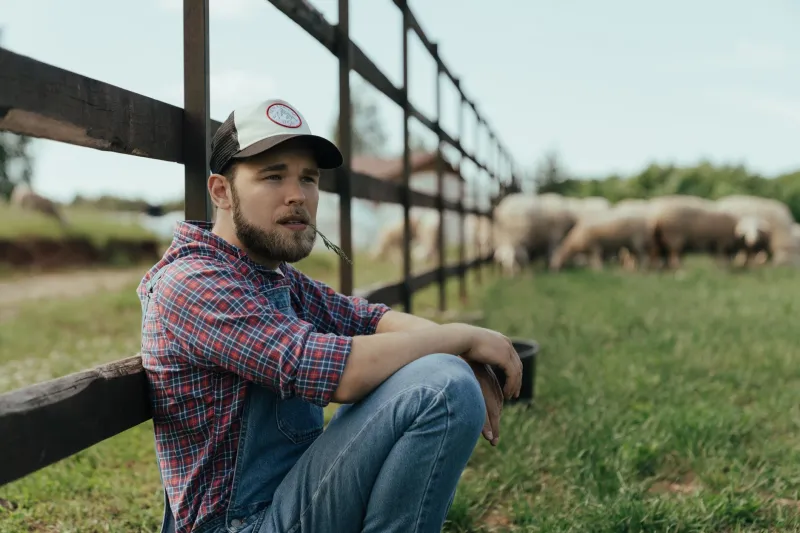
In the summer of 2024, rancher Dale Kettner watched the creek that bisects his 3,200-acre property near Roundup slow to barely a trickle. He had seen dry summers before — decades of them — but something felt different this time. His neighbors were pulling more water. The city upstream had expanded its municipal intake. And somewhere in Helena, lawyers were filing motions that could, he feared, permanently alter how much of that water he could legally call his own.
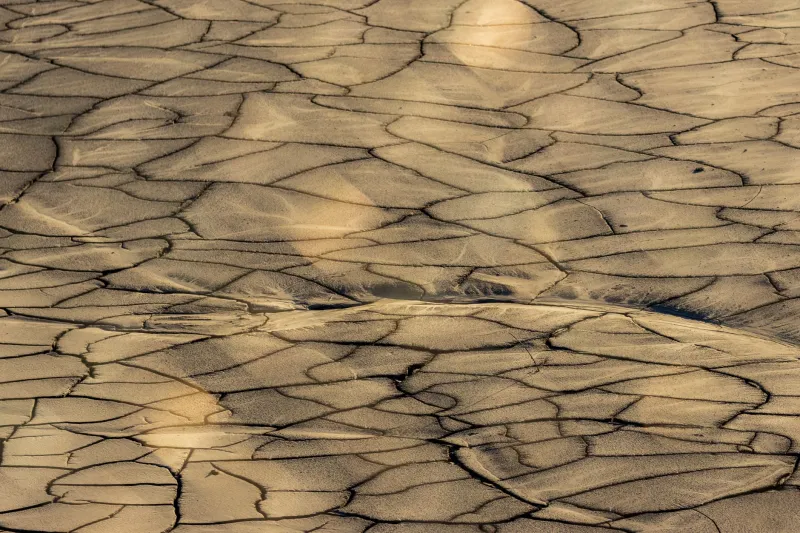
"Water is the blood of this land," Kettner said, standing beside a cracked irrigation ditch that once ran strong through July. "Take it away and everything else dies with it."
Kettner's predicament is not unique. Across Montana, a complex and often bitter contest over water rights is intensifying, drawing in agricultural producers, Native American tribes holding federally protected treaty claims, and rapidly expanding cities such as Bozeman and Missoula. The outcome of this fight — conducted simultaneously in courtrooms, legislative chambers, and at kitchen tables across the state — will determine who thrives in Montana's increasingly arid future and who is left with nothing but dust.
A System Built for a Different Era
Montana allocates water under the prior appropriation doctrine, a framework inherited from the 19th century that grants water rights on a first-come, first-served basis. The principle is straightforward: whoever established a water claim earliest holds the strongest right during times of shortage. In practice, however, the system has grown extraordinarily complicated.
The Montana Department of Natural Resources and Conservation (DNRC) has been working for decades to adjudicate the state's roughly 219,000 existing water rights claims — a process that began formally in 1979 and remains unfinished. Legal experts estimate the adjudication could extend into the 2030s, leaving thousands of water users in a state of prolonged uncertainty.
"The adjudication is the foundation of everything," said state Sen. Andrea Olsen, D-Missoula, who sits on the Legislature's water policy committee. "Until we know who holds what, every drought becomes a potential legal crisis."
That crisis has arrived ahead of schedule.
Tribal Rights: Senior Claims in a Junior System
Among the most significant — and frequently contested — water claims in Montana belong to the state's tribal nations. Under the Winters Doctrine, established by the U.S. Supreme Court in 1908, tribes retain reserved water rights that predate virtually all state-issued appropriations. These federally protected claims are, in legal terms, senior to nearly every rancher, farmer, or city in the state.
The Confederated Salish and Kootenai Tribes (CSKT) reached a landmark water compact with the state of Montana in 2015, a settlement ratified by the U.S. Congress in 2020 after years of contentious debate. The compact, which governs water use in the Flathead River Basin, was hailed by supporters as a pragmatic resolution that provided certainty for all parties.
Not everyone agreed.
Some agricultural users in the Flathead Valley argued the compact granted the tribes disproportionate control over irrigation water that their families had relied upon for generations. Legal challenges followed, though courts have largely upheld the agreement.
Elsewhere in Montana, tribal water negotiations remain unsettled. The Fort Peck Assiniboine and Sioux Tribes and the Crow Tribe, among others, are still working through formal compact processes with the state. Tribal water managers say the delays carry real consequences.
"Every year without a compact is another year of uncertainty for our communities," said one tribal water resource manager who asked not to be named while negotiations remain ongoing. "We have treaty rights. We have Winters rights. But until those rights are quantified on paper, we can't fully plan for our own future."
Cities at the Tap
Meanwhile, Montana's urban centers are growing at a pace that would have been difficult to imagine two decades ago. Bozeman, now among the fastest-growing small cities in the United States, has seen its population swell past 55,000 residents, with projections suggesting continued expansion through the next decade. Missoula, Kalispell, and Billings are experiencing similar pressures.
Municipal water managers in these cities are scrambling to secure sufficient supply not just for today's residents, but for the tens of thousands expected to arrive in coming years. That competition for water is putting urban interests in direct conflict with agricultural users who have held senior appropriations for more than a century.
"We're not trying to take anyone's water," said a Bozeman city water official who spoke on background. "But we have a legal obligation to provide safe, reliable water to our residents. That means we have to plan aggressively."
For ranchers like Kettner, that kind of planning translates into a threat. Water brokers — some representing municipal interests, others acting independently — have begun approaching agricultural landowners across the state, offering to purchase or lease water rights outright.
"The offers sound good on the surface," Kettner acknowledged. "But once you sell your water right, you've sold your ability to farm. Some of my neighbors have taken the money. I understand why. But I'm not ready to walk away."
Drought as an Accelerant
Underlying every dimension of this conflict is climate. Montana has experienced prolonged drought conditions across much of the state in recent years, and projections from the University of Montana's Climate Office suggest that below-average precipitation and elevated temperatures are likely to persist through the foreseeable future.
Streamflows in major river systems — the Yellowstone, the Clark Fork, the Missouri headwaters — have declined measurably over the past two decades. In some watersheds, summer flows are now insufficient to satisfy all existing water rights simultaneously, triggering formal curtailment orders that cut off junior appropriators.
"When there's enough water, everybody gets along," said John Tubbs, a former director of the DNRC who now consults on water policy. "Drought is the stress test. And right now, the system is being tested in ways it was never designed to handle."
What Comes Next
Legislators, water attorneys, and stakeholders from across the spectrum broadly agree that Montana needs updated tools to manage its water future — though consensus on what those tools should look like remains elusive.
Some advocates are pushing for expanded water leasing markets that would allow temporary transfers of water rights without permanently severing them from the land. Others call for increased investment in water storage infrastructure, arguing that capturing spring runoff could buffer against summer shortages. Tribal representatives emphasize that compact negotiations must be completed and honored.
Sen. Olsen has introduced legislation in recent sessions aimed at improving data collection and streamflow monitoring, arguing that better information is the prerequisite to better decisions. "We can't manage what we don't measure," she said.
For Dale Kettner, the policy debates feel distant from the cracked earth beside his irrigation ditch. He is focused on the coming season, on whether the snowpack will hold, on whether the water will come.
"Montana was built on water," he said quietly. "Whoever figures out how to share it fairly — that's who builds what comes next."