One Teacher, Eight Grades, and a Community Counting on Both
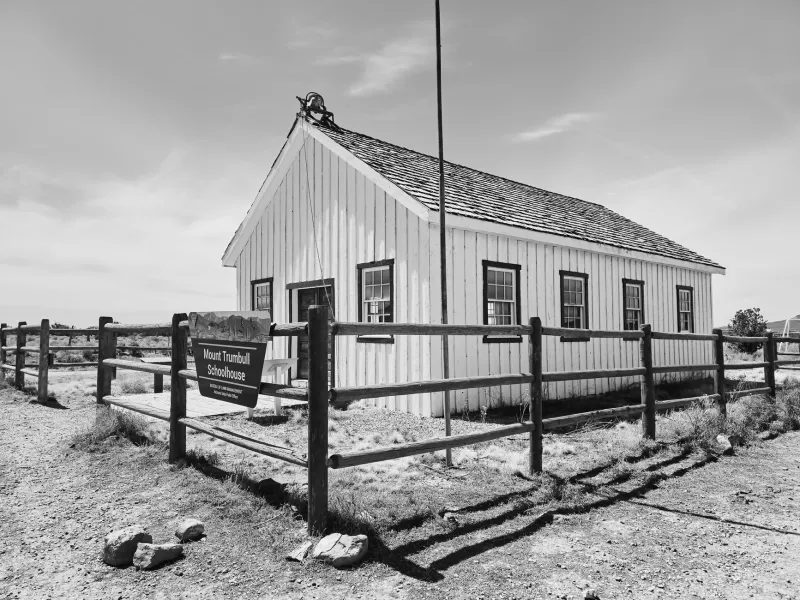
On a frost-hardened morning in Petroleum County, one of the least populated counties in the contiguous United States, a single teacher unlocks the door of a small building that doubles as schoolroom, library, and community hall. Within the hour, seven children ranging in age from six to fourteen will settle into their desks. Some arrived by truck from ranches an hour's drive away. There is no other school for them to attend.
Montana is home to roughly 60 elementary districts that operate just one school with a single teacher — a figure that has declined steadily over the past three decades. These are not relics preserved for nostalgia's sake. They are functioning institutions serving families for whom the nearest consolidated school may be 50 miles or more down a gravel road. Understanding what keeps them alive — and what threatens to extinguish them — requires a closer look at the people inside.
A Classroom Without Walls Between Grades
Teaching a kindergartner to sound out letters while simultaneously guiding an eighth grader through pre-algebra is not a skill most education programs prepare candidates for. Yet that is precisely what educators in Montana's one-room schools do every day.
Sarah Kellerman has taught at a small district school in Garfield County for eleven years. She is the school's only certified teacher. Her current enrollment is nine students.
"You learn to work in layers," she said during an interview at the school, gesturing toward a hand-drawn schedule pinned to the wall. "While one group is working independently on a reading assignment, I'm at the board with another. You never really stop moving."
Research on multi-grade instruction has produced findings that may surprise skeptics. Studies conducted in rural education contexts across the American West suggest that students in these environments often develop stronger self-directed learning habits than their peers in traditional grade-segregated classrooms. Older students frequently reinforce their own understanding by helping younger ones — a dynamic that educators like Kellerman describe as one of the model's quiet advantages.
Still, the demands on a single teacher are extraordinary. Kellerman handles not only instruction across all subjects and grade levels but also administrative paperwork, state reporting requirements, and, in many cases, custodial responsibilities. "There are days when I feel like I'm running a small business," she said. "Except the product is children's futures."
Funding Formulas That Weren't Built for This
Montana's school funding system is designed around a per-pupil allocation model, which creates an immediate structural disadvantage for one-room schools. A district with nine students receives a fraction of the total funding that a larger district collects — yet it still must employ a fully certified teacher, maintain a building, and meet the same state accreditation standards.
The state does provide what is called a guaranteed tax base program intended to equalize funding disparities between property-rich and property-poor districts. Advocates for small rural schools argue, however, that this mechanism does not adequately account for the fixed operational costs that remain constant regardless of enrollment.
"Whether you have eight kids or eighty, you still need a furnace that works in January," said Dale Hutchins, a rancher and school board chair in a remote eastern Montana district. "The math just doesn't scale the way the formula assumes it does."
Legislative sessions in Helena have periodically taken up the question of small school funding, but sustained reform has proven elusive. During the 2023 session, a proposal to create a dedicated small-school viability fund drew support from rural legislators but stalled before reaching a floor vote. Advocates say they intend to reintroduce similar legislation and are working to build broader coalition support ahead of the next session.
More Than a School: The Anchor of Isolated Communities
For the ranching families who depend on these schools, the stakes extend well beyond education. In communities where the nearest grocery store may require a two-hour round trip, the schoolhouse often serves as the de facto gathering place for the surrounding area.
Parent-teacher nights double as community suppers. Holiday programs draw in neighbors who might otherwise go weeks without social contact. In at least one Chouteau County district, the school building serves as an emergency shelter and meeting point during severe weather events.
"If this school closes, I don't know what happens to this community," said Linda Arness, a mother of three whose children attend a one-room school north of the Missouri River breaks. "People would have to choose between their land and their kids' education. Some would leave. And once people start leaving, it doesn't stop."
Demographic data supports her concern. Research conducted by the Montana Rural Education Association has found that rural school closures frequently accelerate population loss in the surrounding area, as families with school-age children relocate to communities with accessible education options. The downstream effects — reduced property tax bases, diminished local business activity, hollowed-out civic infrastructure — can be severe and difficult to reverse.
Accreditation, Recruitment, and the Pipeline Problem
Beyond funding, one-room schools face a persistent challenge in attracting and retaining qualified teachers. Montana's educator shortage, which has been documented across the state in recent years, hits small rural districts with particular force. Salaries in these districts are often lower than those offered by larger consolidated schools, and the professional isolation — no colleagues to consult, no department heads to advise — can be daunting for new graduates.
The Montana Office of Public Instruction has taken some steps to address rural teacher recruitment, including loan forgiveness incentives and alternative licensure pathways. Educators and administrators in small districts say these efforts are meaningful but insufficient given the scale of the challenge.
"We've had years where we couldn't find anyone," said one district clerk in Phillips County, who asked not to be named because of ongoing hiring negotiations. "You end up applying for emergency permits, trying to make it work. It's stressful for everyone, especially the families."
Some districts have begun exploring cooperative arrangements with neighboring small schools, sharing specialist teachers for subjects like music or physical education on a rotating basis. These informal networks have shown promise, though they depend heavily on geography, road conditions, and the goodwill of participating communities.
A Question of Will, Not Just Resources
Those closest to Montana's remaining one-room schoolhouses tend to resist the framing that their institutions are inevitably doomed. They point to the adaptability their schools have already demonstrated, the deep community investment that sustains them, and the genuine educational outcomes their students achieve.
What they ask of state government is not charity — it is recognition. Recognition that the funding formulas governing Montana's education system were not designed with their circumstances in mind, and that correcting that imbalance is a matter of equity as much as efficiency.
"These kids deserve the same shot as any kid in Billings or Missoula," Kellerman said, straightening a row of student artwork taped to the wall beside the chalkboard. "The zip code shouldn't determine the quality."
As the morning sun crept across the schoolroom floor and her students settled into their work, the scene felt both ordinary and quietly remarkable — a small institution holding a large community together, one school day at a time.