Learning Beyond the Bell: Montana Schools Bet on the Wilderness as a Classroom
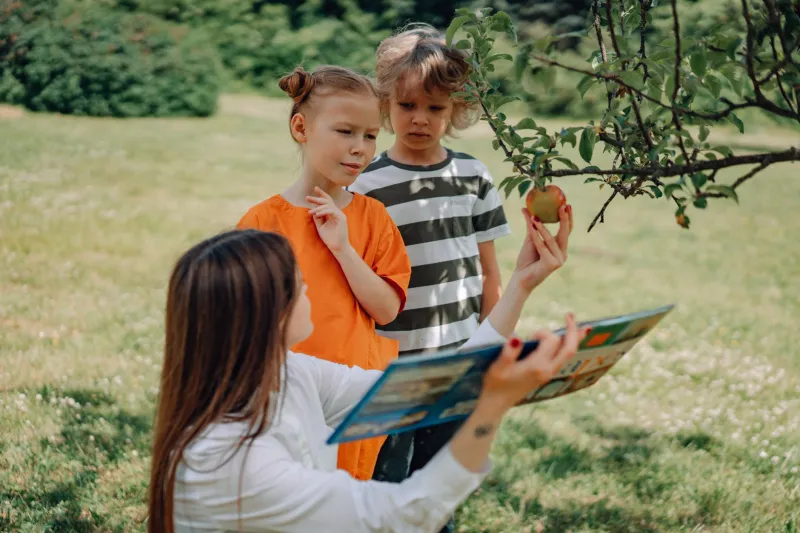
On a crisp Tuesday morning in late September, a group of seventh graders from Hellgate Middle School in Missoula crouched beside the Clark Fork River, notebooks in hand, measuring water clarity and cataloging aquatic insects. Their science teacher stood nearby, not at a whiteboard but at the water's edge, pointing out the relationship between riparian vegetation and macroinvertebrate diversity. The lesson was rigorous. It was also, by every measure, deeply Montanan.
"You can read about a watershed in a textbook," said the teacher, gesturing toward the current. "Or you can stand in one."
This is the animating philosophy behind a movement that is quietly gaining momentum across Montana's public school system — one that seeks to formally weave outdoor and wilderness education into the fabric of K-12 learning. Proponents argue that Montana's extraordinary natural landscape is not merely a backdrop for recreation; it is a living classroom that can transform how students engage with science, history, mathematics, and even civic life.
From Margins to Mainstream
Outdoor education is not a new concept in Montana. For decades, individual teachers have incorporated nature-based activities into their instruction, and organizations like the Montana Outdoor Science School have offered supplemental programming to districts willing to participate. What is new is the push to move these experiences from the margins of the curriculum to its center — and to codify that shift in state policy.
In the 2023 legislative session, a bipartisan bill was introduced that would have directed the Office of Public Instruction to develop statewide standards for place-based and outdoor education across multiple subject areas. The bill did not pass, but it sparked a conversation that advocates say is far from over. Several of its sponsors have indicated they intend to reintroduce the measure with modifications in 2025.
In the meantime, a handful of districts have moved forward on their own. The Missoula County Public Schools system has been piloting an integrated outdoor learning program at the elementary and middle school levels since 2021. In Bozeman, a partnership between the school district and Montana State University has embedded environmental science field experiences into the standard eighth-grade curriculum. In Billings, an after-school outdoor education initiative has expanded into elective coursework at two high schools.
What the Research Says — and What Students Say
The academic case for outdoor education has grown substantially over the past two decades. Studies published in peer-reviewed journals have linked nature-based learning to improved attention, stronger retention of scientific concepts, reduced anxiety, and greater student engagement — particularly among students who struggle in traditional classroom settings.
For Montana educators, the research validates what many already observed intuitively. "I have kids who tune out the moment they sit down at a desk," said one elementary school teacher participating in the Missoula pilot. "The same kids, outside, are asking questions I can barely keep up with."
Students themselves are often the most persuasive advocates. A high school junior who participated in a week-long wilderness science program in the Bob Marshall Wilderness described it as the most academically meaningful experience of her school career. "We were doing real science," she said. "Not worksheets. Actual science, with actual consequences if we got it wrong."
That sense of consequence and authenticity is central to the philosophy driving the movement. Outdoor education, its proponents argue, teaches students not only content but competence — the ability to observe carefully, adapt to changing conditions, work collaboratively, and tolerate uncertainty.
The Funding Debate
For all its appeal, the push to formalize outdoor education faces a significant and familiar obstacle: money. Montana's public schools, like those in many rural states, operate under persistent budget constraints. Administrators must constantly weigh competing priorities, and the argument that resources should be redirected toward experiential learning programs is not universally embraced.
Skeptics raise legitimate questions. Transportation costs for field-based instruction can be substantial, particularly for rural districts already stretched thin. Liability concerns associated with outdoor activities require careful management. And some educators and parents worry that time spent outside the traditional classroom comes at the expense of foundational skills in reading and mathematics — subjects on which student performance is measured and schools are evaluated.
"I believe in outdoor education," said one school board member from a small eastern Montana district. "But I also have to answer to parents whose kids are behind in reading. I can't do everything at once."
Advocates for the movement are sensitive to these concerns and have worked to reframe outdoor education not as a replacement for core academics but as a vehicle for delivering them. A well-designed outdoor science unit, they argue, can meet state standards in biology, earth science, and data analysis simultaneously — while also building the kind of student engagement that improves performance across all subjects.
The Unique Montana Argument
Perhaps the most compelling case for outdoor education in Montana is simply the state itself. With more than 30 million acres of public land, world-class river systems, mountain ranges, grasslands, and one of the most ecologically diverse landscapes in North America, Montana possesses educational resources that no other state can fully replicate.
That argument resonates across party lines in a state where the relationship between residents and the land is not ideological but practical and deeply personal. Ranchers, conservationists, hunters, and hikers may disagree on many things, but most share a conviction that understanding the natural world is a fundamental part of what it means to grow up in Montana.
State Superintendent Elsie Arntzen, before leaving office, emphasized place-based learning as a component of Montana's Indian Education for All initiative, which requires schools to incorporate the history, culture, and land-based knowledge of Montana's Indigenous peoples into their curricula. Advocates for outdoor education have worked to align their proposals with that existing framework, arguing that the two movements share a foundational respect for experiential, land-connected learning.
A Movement Still Taking Shape
The path toward a formalized outdoor education curriculum in Montana's public schools remains uncertain. Legislative support exists but is not yet sufficient to drive a comprehensive policy change. Funding mechanisms remain undeveloped. And the patchwork of district-level pilot programs, while promising, has yet to produce the kind of statewide data that might persuade skeptical legislators and school board members.
But the momentum is real, and the teachers and students driving it are not waiting for Helena to catch up. On that September morning along the Clark Fork, the seventh graders packed their notebooks and field kits and began the walk back to the school bus. One student paused at the riverbank and looked back at the water.
"Can we come back next week?" she asked.
Her teacher smiled. "That," she said, "is exactly the point."