Spurs, Sawdust, and an Uncertain Future: Montana's Small-Town Rodeo Fights to Stay Alive
Spurs, Sawdust, and an Uncertain Future: Montana's Small-Town Rodeo Fights to Stay Alive
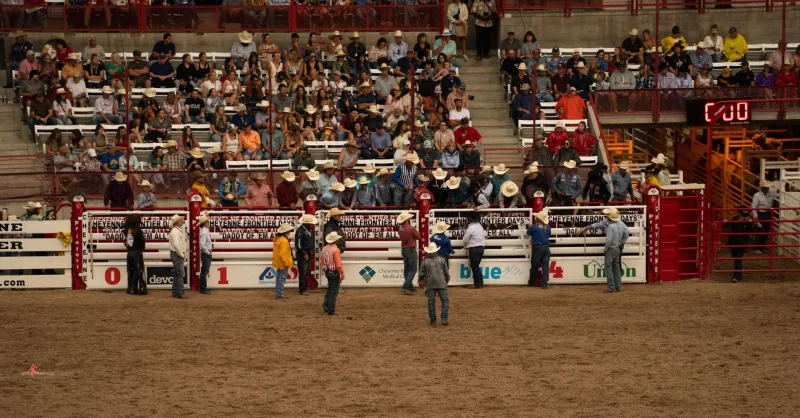
The smell of livestock and fresh-turned dirt has greeted fairgoers at the Fergus County Rodeo for as long as most Lewistown residents can remember. Bleachers that once overflowed on summer Saturday evenings have, in recent years, hosted noticeably thinner crowds. The concession lines are shorter. The contestant rosters, once padded with local ranch kids who had been roping calves since before they could drive, now carry gaps that organizers scramble to fill.
This scene is not unique to Lewistown. Across Montana — from the Flathead Valley to the Yellowstone River corridor — the small-town rodeo circuit is confronting a convergence of pressures that its organizers describe as unlike anything the tradition has weathered before.
A Tradition Rooted in the Landscape Itself
Rodeo in Montana was never simply a sport. It was a functional extension of ranch life — a public demonstration of skills that cowboys and cowgirls used every day to manage cattle across millions of acres of open range. Timed events like steer wrestling and calf roping mirrored the actual work of the land. Bull riding, for all its spectacle, carried the same matter-of-fact relationship with danger that defined agricultural life in the Northern Rockies.
Local rodeos became community anchors. They drew families from distances that, in the pre-interstate era, required genuine commitment to travel. They raised money for local charities, boosted the economies of small towns during summer months, and gave rural youth a competitive outlet tied directly to their own cultural inheritance.
"My grandfather competed here. My father competed here. I competed here," said one third-generation rancher from Cascade County, who has served on his local rodeo association's board for the past eleven years. "When I look at the entry sheets now and see the same fifteen names I saw five years ago — and none of them under thirty — that tells me something serious is happening."
The Economics Are Getting Harder to Ignore
Organizing a sanctioned rodeo in 2024 is a fundamentally different financial proposition than it was two decades ago. Insurance premiums for events involving livestock and high-risk competition have climbed steadily. Arena maintenance, livestock hauling, and contractor fees for stock providers — the companies that supply the bulls, broncs, and steers central to the competition — have all increased substantially. Smaller associations that once operated on modest volunteer budgets now find themselves staring at operational costs that can exceed $50,000 for a single weekend event.
Prize money, meanwhile, has largely stagnated at many local venues. That creates a compounding problem: without competitive purses, experienced riders who might otherwise make the circuit through Montana have less incentive to enter, which in turn reduces the quality of competition that draws paying spectators.
"You're trying to attract competitors with prize money you can't afford to raise, while your gate revenue is flat because attendance is down," explained the executive director of one regional rodeo association, who asked not to be identified by name. "It's a cycle that's very difficult to break without outside investment or a major shift in how these events are funded."
Sponsorship, once a reliable supplement drawn from local agricultural businesses, has also become more competitive. Corporate agricultural brands that once directed regional marketing dollars toward small-town rodeos now increasingly consolidate their sponsorships around larger, televised events.
Where Have the Young Riders Gone?
The question that keeps rodeo organizers awake at night is not only financial — it is demographic. Youth participation in high school rodeo programs across Montana has held relatively steady in some regions, but the pipeline from high school competition into adult amateur and semi-professional circuits appears to be narrowing.
The reasons are varied and, in many cases, structural. The cost of competitive equipment — saddles, protective gear, roping horses — has increased dramatically. A family looking to outfit a serious young competitor can expect to spend tens of thousands of dollars before their child ever enters a professional circuit. For ranch families already operating on thin margins, that investment is increasingly difficult to justify.
At the same time, the broader cultural landscape has shifted. Young Montanans in rural communities have access to a wider array of competitive and recreational options than previous generations did. Travel sports leagues, organized athletics at consolidated regional schools, and the pull of urban centers for post-secondary education all compete for the attention and commitment of teenagers who might once have defaulted toward the arena.
"I'm not going to pretend that every kid on a ranch still wants to rodeo," said a high school rodeo coach from eastern Montana. "Some of them do, and they're incredible athletes. But others are just as happy playing basketball or doing something online. The automatic assumption that ranch kids become rodeo kids — that's not as automatic as it used to be."
The Organizers Who Refuse to Quit
Despite the headwinds, there is no shortage of Montanans who regard the survival of local rodeo as a matter of genuine cultural urgency — and who are working creatively to ensure it.
Several associations have experimented with format changes designed to broaden appeal without diluting competitive integrity. Shorter event schedules, evening performances timed to accommodate working families, and the introduction of ancillary entertainment have all been tried with varying degrees of success. A handful of venues have invested in upgraded facilities, reasoning that a more comfortable spectator experience will attract casual attendees who might not otherwise prioritize a rodeo weekend.
Others have turned to community fundraising and local government partnerships. In at least two Montana counties, rodeo associations have successfully made the case to county commissioners that their events represent meaningful economic activity for local businesses — hotels, restaurants, fuel stations — and have secured modest public support as a result.
There is also a quiet generational transfer happening at some venues, as younger adults in their twenties and thirties step into organizational roles and bring different approaches to promotion, social media outreach, and community engagement. Whether that energy is sufficient to reverse broader trends remains an open question.
What Authenticity Is Worth
Underlying every conversation about the rodeo's future is a tension that is difficult to resolve cleanly. The qualities that make Montana's small-town rodeo circuit distinct — its informality, its roots in actual ranch work, its resistance to the polished commercialism of professional touring events — are precisely the qualities that make it harder to compete in a modern entertainment marketplace.
To survive, some argue, rodeo must modernize its presentation, expand its audience, and embrace a degree of spectacle that may feel foreign to purists. Others contend that chasing broader appeal is a path toward losing the very identity that gives these events their meaning.
"The moment it stops feeling like something real," said one longtime competitor from the Bitterroot Valley, pulling on a well-worn pair of work gloves after a morning spent moving cattle, "it stops being Montana rodeo. It becomes something else."
For the ranching families, the volunteer organizers, and the communities that have built summer calendars around these events for generations, that distinction is not a small one. It may, in fact, be everything.
The arena lights will come on again this summer across dozens of Montana towns. Whether the crowds that gather beneath them represent a tradition holding firm — or one in the final stages of a long farewell — is a question the state's rural communities are only beginning to fully reckon with.