Buffalo Coming Home: Montana's Indigenous Nations Reclaim a Practice Older Than Memory
Buffalo Coming Home: Montana's Indigenous Nations Reclaim a Practice Older Than Memory
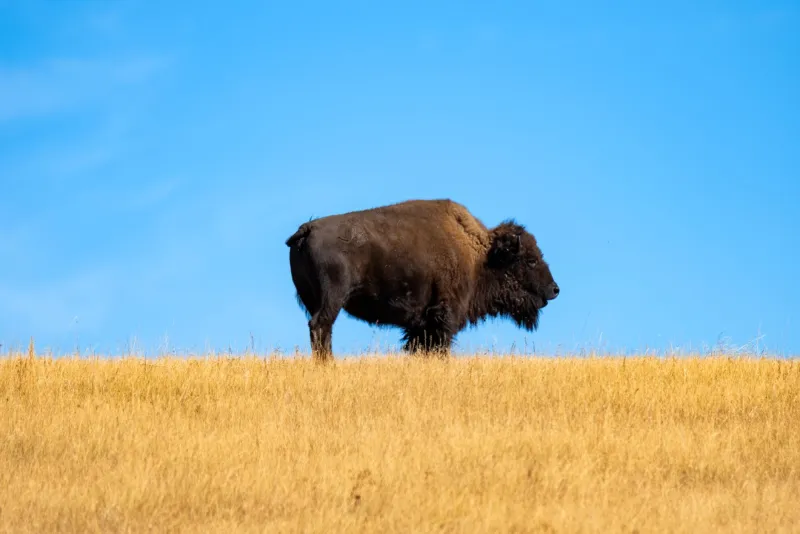
On a cold October morning along the wind-scoured edges of the Blackfeet Reservation, Earl Old Person Jr. watched a small herd of bison move across a ridge his grandfather once described in stories. He had heard those stories dozens of times — the dust, the thunder of hooves, the prayers spoken before the hunt. Until recently, that was all they were: stories. This autumn, for the first time in his adult life, he carried a rifle onto that same ground with the blessing of his tribal council and the weight of generations behind him.
"The buffalo didn't just feed us," Old Person said, pausing to choose his words carefully. "They were us. When they disappeared, something in us disappeared too."
Across Montana, several Indigenous nations are in the midst of a deliberate and emotionally charged effort to restore bison hunting — not as a tourist attraction or a historical reenactment, but as a living cultural practice with profound spiritual and subsistence dimensions. The movement is gaining momentum, driven by a convergence of legal victories, inter-governmental land agreements, and a generation of tribal leaders who view ecological restoration and cultural sovereignty as two sides of the same coin.
A Century of Absence
The near-total elimination of the American bison in the late 19th century was not incidental to the colonization of the West — it was, by many historical accounts, a deliberate instrument of it. By the 1880s, an estimated 30 to 60 million animals had been reduced to fewer than a thousand. For the tribes of the Northern Plains, including Montana's Blackfeet, Crow, Assiniboine, Gros Ventre, and others, the loss was catastrophic in every sense: nutritional, economic, ceremonial, and psychological.
Federal policies compounded the damage, restricting tribal movement and effectively severing nations from the lands and wildlife they had managed for millennia. Bison hunting, once the organizing principle of entire cultures, became illegal or inaccessible almost overnight.
The recovery of bison populations over the past several decades — driven largely by conservation ranching and federal refuge programs — has reopened a door that many tribal members never stopped hoping would swing again.
Legal Ground, Hard Won
The legal architecture supporting tribal bison hunting in Montana is patchwork but expanding. Treaty rights negotiated in the 19th century — documents that the federal government has often interpreted narrowly — have been revisited and reaffirmed in recent years through a combination of litigation, negotiation, and executive action.
The Blackfeet Nation, whose 1895 agreement with the federal government reserved certain hunting rights on what is now Glacier National Park's eastern boundary, has been among the most assertive in pressing those claims. Tribal attorneys have argued successfully in several administrative proceedings that those rights extend to bison on adjacent federal lands, a position that has created both opportunity and ongoing legal ambiguity.
Further south, the Crow Tribe has entered into cooperative agreements with the National Park Service and the state of Montana to facilitate limited bison transfers from Yellowstone National Park — a program that serves dual purposes: reducing the park's population pressure and restoring a culturally significant animal to tribal lands. The Fort Peck Assiniboine and Sioux Tribes have operated one of the longest-running tribal bison herds in the region, a program that now numbers in the hundreds and has become a model for other nations.
"Every one of these agreements took years," said a tribal wildlife manager with the Confederated Salish and Kootenai Tribes, who asked not to be identified by name pending ongoing negotiations with state agencies. "You don't just pick up the phone and say, 'Send us some buffalo.' There are land-use reviews, state consultations, federal sign-offs. The bureaucracy is real. But so is what's on the other side of it."
The Elders Speak, the Youth Listen
At the Fort Belknap Indian Community, where both the Assiniboine and Gros Ventre peoples live, tribal elders have played a central role in shaping what a revived bison hunt looks like in practice. The protocols are not improvised. They draw on oral tradition, consultation with knowledge keepers, and a recognition that the hunt is not merely a food-gathering exercise.
Rosalie Longknife, 74, a Gros Ventre elder who has spent years documenting traditional ecological knowledge, describes the preparation for a hunt as a process that begins long before anyone sets foot on the land. "You have to be in the right relationship with the animal," she said during a community gathering last spring. "That means prayer, that means humility, that means knowing what you're taking and why. We didn't lose that knowledge. It was just waiting."
For younger tribal members, participating in or witnessing a ceremonial hunt for the first time has registered as something closer to revelation than recreation. Community health workers on several reservations have noted — cautiously, and without overstating causation — that bison restoration programs correlate with increased youth engagement, reduced dropout rates in some areas, and a measurable uptick in cultural pride among adolescents involved in the programs.
"I've watched kids who barely showed up to anything come alive when there's a buffalo involved," said one youth coordinator at the Blackfeet Community College. "It's not magic. It's identity."
Where Ancient Rights Meet Modern Fences
Not everyone in Montana has welcomed the expansion of tribal bison hunting with open arms. Some ranchers whose properties border reservation lands or federal grazing allotments have expressed concern about bison movement, disease transmission — particularly brucellosis, a bacterial infection that can spread between bison and cattle — and the potential for animals to cross property lines.
The Montana Department of Livestock has historically taken a hard line on free-roaming bison, particularly those originating from Yellowstone, and the agency's posture has not shifted dramatically despite changing political winds at the federal level. State legislators from agricultural districts have periodically introduced bills to restrict bison movement or limit tribal hunting authority, though such measures have faced significant legal obstacles given the primacy of treaty rights under federal law.
Tribal wildlife managers argue that their bison management practices are rigorous, science-based, and in many cases more ecologically sophisticated than the alternatives. "We've been doing land management on this continent for thousands of years," said one Crow Nation wildlife official. "We're not asking for permission to be responsible. We're asking for space to exercise rights we already have."
The tension is real, and it is unlikely to dissolve quickly. But there are signs of pragmatic cooperation in some corners. A handful of ranchers near the Blackfeet Reservation have entered into informal conversations with tribal wildlife staff about coordinated grazing management — recognizing that a landscape shared with bison may require new habits of mind on all sides.
The Deeper Return
For the tribal communities at the center of this story, the stakes reach well beyond the legal or the ecological. The return of the bison hunt is, at its core, an act of cultural continuity — a refusal to accept that what was taken cannot be restored.
Earl Old Person Jr. finished his hunt that October morning. He said a prayer his grandmother had taught him, one she had learned from her own grandmother. He did not describe what happened next in detail — some things, he explained, are not for public consumption. But he said that when it was over, he sat on the frozen ground for a long time and felt something settle in him that he had not known was unsettled.
"The buffalo remembered us," he said simply. "I think we're just starting to remember ourselves."
For Montana's Indigenous nations, that remembering is not nostalgia. It is governance, ecology, healing, and sovereignty — practiced at dawn, on open ground, with the wind coming off the Rockies and the plains stretching out in every direction, as they always have.