Cattle, Cameras, and a Crossroads: Montana's Guest Ranch Tradition Faces Its Reckoning
Cattle, Cameras, and a Crossroads: Montana's Guest Ranch Tradition Faces Its Reckoning
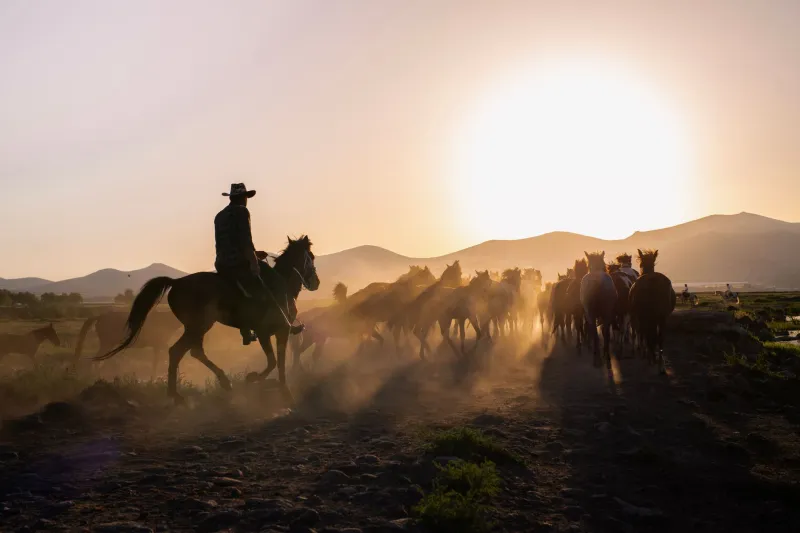
On a cool Tuesday morning in the Absaroka foothills, third-generation rancher Dale Whitmore is doing what his grandfather did on this same land in 1951 — moving a herd of Black Angus across a frost-hardened pasture before breakfast. What his grandfather never did, however, was pause the drive so a guest from New Jersey could reframe the shot.
"I don't begrudge them for wanting a picture," Whitmore says, watching a pair of visitors fumble with smartphone gimbals near the fence line. "But there are mornings when I wonder if we're running a cattle operation that hosts guests, or a photo backdrop that happens to own cows."
It is a distinction that carries enormous weight across Montana, where the guest ranch — commonly called the dude ranch — has been a fixture of the state's economy and cultural identity since the early twentieth century. Today, that tradition stands at a crossroads, pulled in competing directions by the economics of modern tourism, the demands of working agriculture, and the relentless aesthetic machinery of social media.
A Tradition Built on Honest Labor
The dude ranch concept took root in Montana and Wyoming in the 1880s and 1890s, when cash-strapped ranchers began charging Eastern visitors for the privilege of experiencing ranch life firsthand. By the 1920s, outfits like the Elkhorn Ranch in the Bitterroot Valley had formalized the arrangement into a legitimate hospitality industry. Guests paid for authentic participation — branding, fence repair, trail rides through terrain that didn't care about their comfort.
The appeal was never luxury. It was reality. And for decades, that distinction sustained hundreds of family operations across the state.
"My grandmother used to say the guests were guests, but the ranch came first," recalls Carol Hennessey, who co-owns the Hennessey Creek Ranch outside Livingston with her husband, Tom. The Hennesseys represent the fourth generation of their family to operate the property. "The cattle had to be fed whether someone's vacation schedule liked it or not. That was the whole point — guests understood they were stepping into a real world, not a stage set."
According to the Dude Ranchers' Association, Montana is home to more than 60 member ranches, with dozens of additional independent operations scattered across the state. The industry generates an estimated $50 million annually in direct visitor spending, with significant downstream effects on rural economies through feed suppliers, outfitters, and local food producers.
When the Algorithm Arrives at the Gate
The social media era has not been entirely unkind to Montana's guest ranches. Instagram, in particular, has introduced the concept to an entirely new generation of potential visitors, many of whom would never have encountered a dude ranch advertisement in a traditional travel magazine. Occupancy rates at several operations climbed sharply between 2018 and 2023, and waitlists at premium ranches now stretch into multiple seasons.
But the visitors arriving today often carry expectations shaped less by the ranching tradition than by the curated imagery that drew them here in the first place. Tourism economists have begun tracking what some in the industry call the "aesthetic gap" — the distance between what social media presents and what a functioning cattle operation actually looks like, smells like, and demands.
"There's a meaningful segment of modern ranch tourism that is really purchasing a visual identity," says Dr. Pamela Kruse, a tourism economist at Montana State University who studies rural hospitality markets. "They want the hat, the horse, the golden-hour photograph with mountains behind them. The actual labor of ranching — the early mornings, the physical difficulty, the unglamorous parts — is not necessarily what they signed up for, even if the brochure said otherwise."
That tension surfaces in concrete ways. Ranch owners report guests requesting schedule modifications to accommodate better lighting, complaints about livestock odors in accommodations that have stood for eighty years, and an increasing reluctance to participate in work activities that involve real physical effort or risk. Several operators, speaking on background, described abandoning traditional work programs altogether in favor of guided scenic rides and curated campfire experiences — changes driven entirely by guest feedback and online reviews.
The Labor Problem Nobody Is Photographing
Behind the aesthetic debate lies a structural challenge that threatens the industry's foundation more quietly but perhaps more permanently: the collapse of the experienced ranch hand workforce.
Montana's agricultural labor pool has been shrinking for years, a product of aging demographics, competition from other industries, and the economic difficulty of rural living. Guest ranches, which require staff fluent in both genuine ranching skills and hospitality service, occupy a particularly difficult position in that labor market.
"I need someone who can shoe a horse, read cattle behavior, fix a fence in the dark, and then turn around and be patient with a guest who's never been near a farm animal," says Whitmore. "That person is getting harder to find every year. And I can't pay what a resort in Bozeman can pay, because I'm also running actual cattle."
The infrastructure challenge compounds the labor shortage. Many of Montana's most storied guest ranches operate out of buildings constructed in the mid-twentieth century, maintained through decades of careful stewardship but now requiring capital investment that the ranching margins alone cannot support. For some families, the influx of higher-paying tourism guests has become the financial mechanism that keeps the underlying ranch operation viable. For others, the tourism revenue has quietly become the primary business, with cattle serving as atmosphere.
"I'll be honest with you," says Tom Hennessey, leaning against a corral post. "There are years when the guests pay the mortgage and the cows are what makes it feel like home. I'm not sure which direction that's heading."
Lifeline or Slow Erasure?
The debate within Montana's ranching community is not settled, and opinions divide sharply depending on where a family sits financially and philosophically. Some operators view the Instagram generation as a genuine lifeline — a new audience willing to pay premium rates for an experience that, even imperfectly delivered, keeps multi-generational properties out of the hands of developers. Others see the accommodation of social media tourism as a gradual surrender of the very identity that made these operations worth preserving.
Dr. Kruse argues the outcome will likely vary by operation. "The ranches that have the land base, the authentic cattle operation, and the family commitment to maintain both have a real story to tell — and modern visitors will pay for authenticity if it's genuine," she says. "The risk is for operations that start performing ranching rather than doing it. At that point, you're a theme park with better scenery, and theme parks don't have the same staying power."
Carol Hennessey puts it more plainly. "My kids are going to have to decide what this place is," she says. "I just want them to decide before the ranch decides for them."
For now, Dale Whitmore finishes his morning drive, the herd settled, the guests back at the lodge uploading their footage. The mountains beyond the pasture are indifferent to the question entirely. The land has always asked the same thing of the people who work it. Whether those people — and the visitors who come to watch — are still listening is the question Montana's ranching families will be answering for the next generation.