Roots and Resistance: Montana's Seed Keepers Fight to Preserve What Industrial Agriculture Would Erase
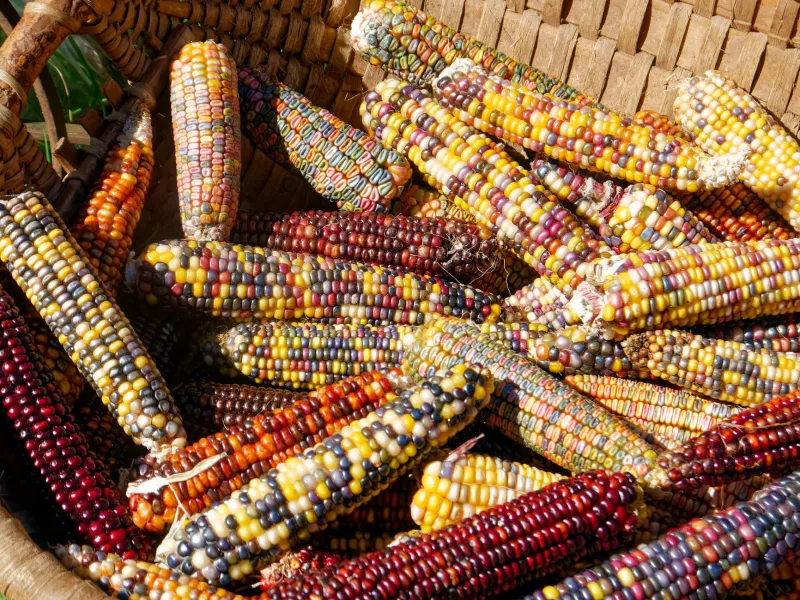
In a repurposed grain building on the edge of a small town in the Flathead Valley, Margaret Sorenson keeps her library. The collection occupies dozens of labeled envelopes, glass jars, and sealed mylar packets arranged on shelves that once held feed supplements and hardware catalogs. Each container holds seeds—dry beans, squash, tomatoes, grains, and greens—many of them varieties that have not appeared in any commercial catalog for decades.
"This one came from a woman whose grandmother brought it from Norway in 1902," Sorenson said, holding a jar of pale, speckled beans up to the window light. "If I don't keep it going, it disappears. Nobody is going to do it for me."
Sorenson is one of a loosely connected network of Montanans who have taken it upon themselves to preserve the agricultural genetic heritage that industrial farming systems have largely discarded. Their work is unglamorous, often financially unrewarded, and frequently misunderstood. It is also, many agricultural researchers argue, critically important.
The Consolidation Pressure
Montana's farming sector has undergone dramatic structural change over the past four decades. The number of farms in the state has declined steadily, while the average farm size has grown. Commodity agriculture—wheat, barley, lentils, canola—has become increasingly dominated by large operations that depend on commercially certified seed varieties developed and sold by a shrinking number of multinational corporations.
The consolidation of the seed industry itself has been sweeping. A handful of companies now control the majority of commercial seed sales globally, a concentration that has reduced the diversity of varieties available to farmers and, in some cases, restricted the centuries-old practice of saving and replanting seed from one's own harvest.
"When you buy patented seed, you are entering into a licensing agreement," explained one Montana State University extension specialist who studies agricultural policy. "You are not purchasing the right to reproduce it. For a lot of farmers, that represents a fundamental shift in what it means to farm."
The practical consequence has been a narrowing of the genetic pool in commercial agriculture—a reduction in the number of varieties planted across millions of acres, and a corresponding loss of resilience in the face of drought, disease, and climate variability.
What Is Being Lost
Montana's agricultural heritage encompasses a remarkable diversity of adapted varieties developed or refined over more than a century of farming in challenging conditions. Drought-tolerant wheat strains bred for the state's arid eastern plains. Cold-hardy vegetable varieties selected by homesteaders and immigrant communities over generations. Livestock breeds—Scotch Highland cattle, Rambouillet sheep, American Mammoth Jackstock—whose characteristics reflect specific adaptations to Montana's climate and terrain.
Many of these varieties and breeds have no commercial market. They are too low-yielding, too inconsistent, or too unfamiliar to fit the standardized demands of commodity supply chains. And so they disappear—not through any deliberate decision, but through neglect, through the retirement of the last farmer who grew them, through the dispersal of estates that nobody thought to document.
"We lose varieties the way we lose languages," said Dr. Ellen Tran, a plant geneticist who has worked with Montana seed preservation organizations. "Quietly, incrementally, and then suddenly they are gone and there is no recovering them. You cannot reconstruct a landrace wheat from a database entry."
The Keepers
Against that backdrop, a dispersed community of seed savers, heritage breed ranchers, and agricultural archivists has organized—informally, and with limited resources—to slow the erosion.
Seed libraries, modeled on public lending libraries, have opened in several Montana communities. Patrons borrow seed packets in the spring, grow the varieties through the season, save seed from open-pollinated plants, and return a portion of the harvest in the fall. The model requires no significant infrastructure and generates a self-replenishing collection if participants follow through.
The Missoula Public Library hosts one of the state's more established seed lending programs, with a collection that has grown to include more than 200 varieties. Librarians report consistent patron interest, particularly among newer gardeners drawn to heirloom varieties for reasons ranging from food security to culinary curiosity.
On the livestock side, several Montana ranchers have committed to maintaining registered herds of heritage breeds despite the economic disadvantages of doing so. Galloway cattle, once common across the northern plains, are now kept by a small number of dedicated producers who market their animals directly to consumers willing to pay a premium for grass-finished beef from a breed adapted to harsh winters and minimal supplemental feeding.
"These animals don't need what the commercial breeds need," said rancher Tom Belgarde, who runs a small Galloway operation near Jordan. "They winter on grass, they calve without assistance, they use the land the way the land was meant to be used. That has value. It just doesn't always show up in the price sheet."
Institutional Support and Its Gaps
Montana State University's research programs have provided some institutional backing for preservation efforts, particularly in small grains. The university maintains seed stocks of historic wheat and barley varieties that are periodically made available to researchers and, in some cases, farmers. The USDA's National Plant Germplasm System serves a similar function at the federal level.
But institutional preservation has limits. Stored seed must be periodically grown out to maintain viability—a resource-intensive process that competes with other research priorities. And germplasm banks, however well maintained, cannot replicate the living knowledge of farmers who have grown a variety across multiple seasons and learned its particular rhythms and needs.
"The seed and the knowledge belong together," said Sorenson, returning her jar of Norwegian beans to its shelf. "You can freeze a seed. You cannot freeze the understanding of how to grow it, when to plant it, what it needs. That part only lives in people."
The preservation movement in Montana is small relative to the forces arrayed against it. But its practitioners are deliberate, and they are thinking in timescales that commodity markets do not recognize. They are saving seeds for futures they will not live to see, on the conviction that what is planted in the ground today—and what is kept alive in jars and envelopes and careful memory—will matter enormously to the people who come after them.