Dust, Devotion, and Decaying Timber: The Solitary Guardians Keeping Montana's Ghost Towns Alive
Dust, Devotion, and Decaying Timber: The Solitary Guardians Keeping Montana's Ghost Towns Alive
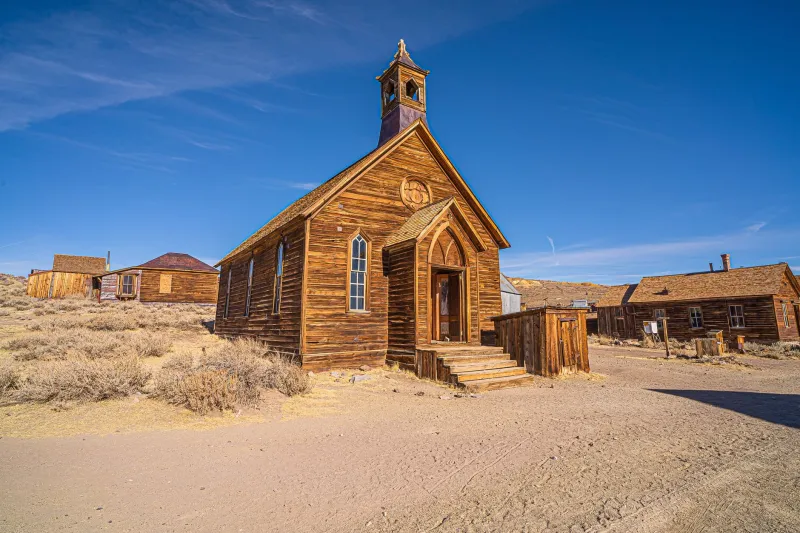
The road to Garnet doesn't announce itself. It branches off a county route east of Missoula with no fanfare, climbs through lodgepole pine and switchback curves, and eventually deposits a visitor in front of what looks, at first glance, like a collapsed dream. Sagging storefronts, caved-in rooftops, and rusted iron machinery sit frozen in a moment sometime around the 1940s. But look more carefully, and you'll notice something else: the structures haven't collapsed entirely. Certain doorframes have been reinforced. A few rooflines have been patched. Interpretive signs, hand-lettered and weathered but still legible, stand at intervals along the main corridor.
Someone has been here. Someone keeps coming back.
Across Montana, an informal network of individuals — largely unaffiliated with state agencies and rarely compensated for their labor — has quietly assumed responsibility for what remains of the state's abandoned mining and frontier settlements. They are not a movement. They have no coordinating body, no shared budget, and no official mandate. What they share is a stubborn conviction that these places matter, and that if they don't act, nobody will.
The Weight of a Forgotten Town
Ron Bischoff has spent the better part of two decades driving back roads in Granite County, cataloguing structures that appear on no current map. A retired heavy equipment operator who spent thirty years working mine sites across the region, Bischoff began photographing abandoned towns in the early 2000s as what he describes as "something to do on weekends." It became considerably more than that.
"You pull up to one of these places and the first thing you feel is the silence," he said during a recent conversation near Phillipsburg. "Then you start to look around and you realize somebody built all of this by hand. Somebody raised children here. And now it's just falling down in the weeds."
Bischoff has since helped stabilize three structures in two separate ghost town sites using his own equipment and materials purchased out of pocket. He estimates he has spent upward of $14,000 over the years, a figure he mentions without apparent resentment. What troubles him more, he says, is the pace of deterioration — and the lack of urgency from the institutions that might otherwise intervene.
The Montana State Historic Preservation Office maintains an inventory of the state's significant historic properties, and a handful of ghost towns fall under some form of protected status. Garnet, for instance, is managed cooperatively by the Bureau of Land Management and a volunteer organization. But the overwhelming majority of the state's abandoned settlements exist in a gray zone — privately owned, on public land but underfunded, or simply unknown to any oversight body.
More Than Nostalgia
It would be easy to characterize these preservation efforts as nostalgia — a sentimental attachment to a romanticized past. The people doing this work tend to resist that framing, and with good reason.
Marjorie Trent, a retired schoolteacher from Helena who has spent years documenting the ghost towns of Jefferson County, argues that these sites are primary historical documents in a way that no exhibit case or museum diorama can replicate.
"When you walk through one of these towns, you're reading the actual story," she said. "You can see where the saloon was relative to the assay office. You can see how the company housing was built differently from the owner's house. That spatial relationship tells you something about power and economics that a photograph on a wall simply cannot."
Trent has self-published two illustrated guides to Jefferson County ghost towns, selling them through local bookshops and at county fairs. The proceeds go back into her documentation work. She is currently compiling oral histories from elderly residents whose grandparents lived in settlements that no longer appear on any official record.
Her concern extends beyond architecture. Montana's ghost towns are, in her view, the most honest record the state has of its boom-and-bust economic identity — an identity that remains very much alive in contemporary debates over mining, energy extraction, and land use.
"Every time there's a new resource rush somewhere in this state, people talk about it like it's a sure thing," she said. "But these towns are what a sure thing looks like fifty years later. That's a lesson worth keeping visible."
Working Without a Net
The challenges facing individual preservationists are considerable. Property ownership disputes can make even minor stabilization work legally complicated. Access roads to remote sites are frequently impassable for months each year. Materials and equipment must often be transported over significant distances at personal expense.
Perhaps most frustrating for many of these individuals is the bureaucratic friction that arises when they attempt to coordinate with state or federal agencies. Several caretakers interviewed for this article described experiences of submitting proposals or requests for formal partnership, only to receive no response or to be told that budget constraints precluded any meaningful collaboration.
"I'm not asking them to do the work," said Dale Hutchins, a retired geologist who has been maintaining a small cluster of structures in a former silver camp in Silver Bow County for eleven years. "I'm asking them to not make it harder for me to do the work myself."
Hutchins has navigated competing land ownership claims, dealt with vandalism on multiple occasions, and replaced a collapsed roof section using timber he milled himself from fallen trees on an adjacent property. He keeps a detailed log of every repair, every visitor he encounters, and every act of damage he discovers — a record he hopes will eventually prove useful to someone with more institutional authority than he currently commands.
What Disappears When the Walls Come Down
Preservationists are candid about the ultimate odds. Montana's climate is unforgiving. Winters that bring heavy snow loads, springs that saturate foundations, and summers that dry and crack timber work against even the most diligent maintenance efforts. Without sustained institutional investment, most of these sites will eventually succumb.
What will be lost when they do is harder to quantify than square footage or timber volume. Ghost towns in Montana are, among other things, geographic anchors for family memory. Descendants of the miners, merchants, and homesteaders who populated these settlements continue to visit them — sometimes traveling from considerable distances — to stand in the approximate location where their ancestors built lives.
"I've had people come out here and just stand there and cry," said Bischoff. "Not because it's sad, exactly. Because it's real. Because it's still there."
For now, it remains there in part because of people like him — individuals who showed up without being asked, who decided that the absence of institutional support was not the same thing as the absence of obligation, and who have continued to return, season after season, to hold back the slow collapse of places that shaped this state and have not yet finished telling their stories.
Montana has always been defined as much by what it has lost as by what it has built. The people maintaining these ghost towns understand that better than most. And they are running out of time to make sure the rest of the state does too.