Neighbors in the Wild: Montana Ranchers and Grizzlies Test the Limits of Coexistence
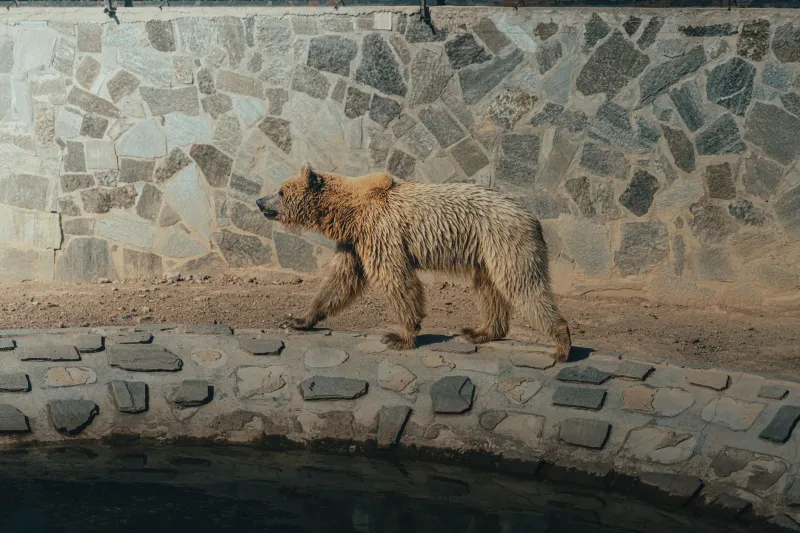
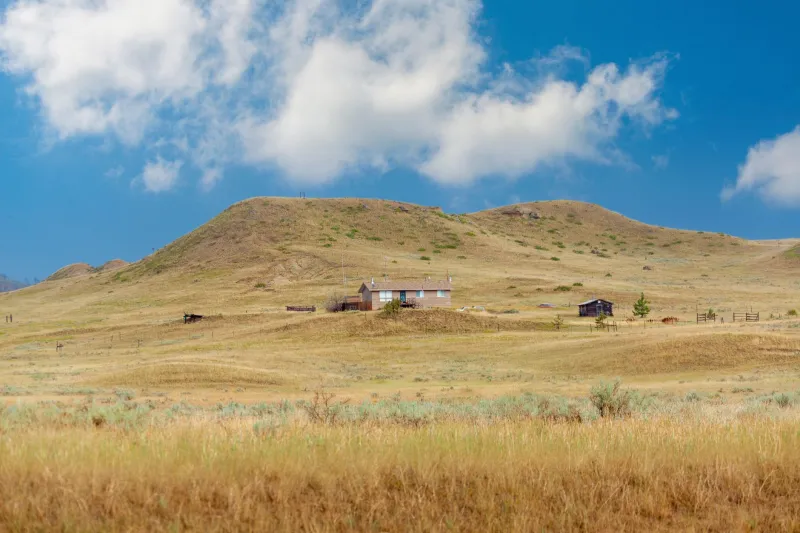
On a quiet September morning outside Choteau, third-generation rancher Dale Whitmore stepped out onto his porch before dawn and found the tracks. Large, unmistakable, pressed deep into the soft earth near his chicken coop. A grizzly bear had passed within forty feet of his back door sometime in the night.
"It's not fear exactly," Whitmore said, scanning the tree line at the base of the Rocky Mountain Front. "It's more like a constant awareness. You never really switch it off."
For communities stretched along Montana's wilderness corridors—from the Blackfoot Valley to the Beartooth foothills—that awareness has become a defining feature of daily life. The grizzly bear, once hunted nearly to extinction in the contiguous United States, has staged one of North America's most celebrated wildlife recoveries. But as populations in the Greater Yellowstone and Northern Continental Divide ecosystems continue to grow, bears are moving into landscapes they have not occupied in generations, and the communities in their path are navigating unfamiliar territory.
A Conservation Success With Complicated Consequences
Federal protections under the Endangered Species Act, enacted in 1975, gave grizzly bears the legal shelter they needed to recover. Estimates suggest fewer than 200 grizzlies remained in the lower 48 states at the time of listing. Today, the Northern Continental Divide Ecosystem alone—encompassing Glacier National Park and surrounding wildlands—supports an estimated 1,000 bears, while the Greater Yellowstone Ecosystem holds roughly 700 more.
Those numbers represent an extraordinary conservation achievement. They also represent a management challenge that wildlife officials, ranchers, tribal nations, and rural families are actively working through—sometimes together, sometimes in open conflict.
Montana Fish, Wildlife and Parks has documented grizzly activity in counties where the species had been absent for decades. Bears are appearing in agricultural valleys, near grain elevators, and along irrigation ditches. The agency responds to hundreds of conflict reports annually, deploying rubber bullets, hazing techniques, and, when necessary, lethal removal.
"We are in an era where the recovery has genuinely succeeded," said one wildlife biologist familiar with the state's management program, speaking on background. "The hard part now is figuring out what success actually looks like for the people who share that ground."
Electric Fences and Livestock Guardian Dogs
In practical terms, adaptation has meant investment. The USDA's Wildlife Services program and nonprofit organizations such as Defenders of Wildlife have helped ranchers install electric fencing around calving areas, beehives, and chicken coops. The technology is not new, but its adoption has accelerated in communities where grizzly sightings have shifted from exceptional to routine.
Outside Lincoln, beekeeper Sandra Okafor lost four hives to a young male grizzly two summers ago. The bear, drawn by the scent of honey and brood, dismantled her equipment with methodical efficiency. After receiving a partial reimbursement through Montana's livestock loss program and a cost-share grant for fencing materials, she rebuilt—this time with a five-strand electric perimeter.
"The fence works," she said. "But you have to maintain it, you have to check it, and you have to remember that the bear is going to test it eventually. It never really stops."
Livestock guardian dogs have also seen renewed interest across the state. Breeds such as the Great Pyrenees and Kangal, traditionally used to deter wolves, are being evaluated for their effectiveness against grizzlies—with mixed but encouraging results reported by several ranching operations in the Blackfoot Valley.
The Cultural Divide Over Bears
Not everyone approaches the question of coexistence from the same starting point. For many Indigenous communities in Montana, the grizzly carries deep spiritual and cultural significance. The return of bears to ancestral territories is viewed by some tribal members not as a problem to be managed but as a restoration to be honored.
"Our relationship with the bear goes back further than anyone can count," said one member of the Blackfeet Nation, whose reservation borders Glacier National Park. "When people talk about grizzlies coming back, we say—they never really left. We just stopped seeing them for a while."
That perspective stands in contrast to the views of some agricultural producers who argue that federal protections have tipped the balance too far in favor of predators at the expense of livelihoods. Several ranching organizations have formally petitioned for the delisting of grizzly bears from Endangered Species Act protections, a move that would return management authority to the state and potentially allow regulated hunting.
The debate has grown politically charged. Proposals to delist grizzlies have advanced and stalled repeatedly in recent years, reflecting the broader national tension between conservation priorities and rural economic interests.
Wildlife Corridors and the Long Game
Beyond immediate conflict mitigation, researchers and conservation planners are focused on a longer-term challenge: ensuring that expanding bear populations have connected habitat through which to move. Fragmented landscapes—cut by highways, subdivisions, and agricultural development—pose one of the greatest threats to grizzly genetic health and population stability.
Efforts to identify and protect wildlife corridors across the Rocky Mountain Front and into central Montana have gained traction among a coalition of landowners, conservation groups, and state agencies. Voluntary conservation easements, which compensate landowners for maintaining natural land uses, have been one tool in that effort.
For Dale Whitmore, the question of corridors is both abstract and immediate. His land sits along a natural travel route between two mountain ranges. He has watched bears cross his property in the early morning hours, moving with purpose from one drainage to the next.
"I'm not against the bear," he said carefully. "I just want a fair shake. I want someone to acknowledge that there's a real cost to this, and that we're carrying more of it than most people realize."
That acknowledgment, many rural Montanans say, is the foundation on which any lasting coexistence must be built—not policy documents or population targets, but a genuine recognition that the weight of living alongside an apex predator falls unevenly, and that those who carry it deserve a seat at the table where decisions are made.