When the Post Office Closes, the Town Starts Dying
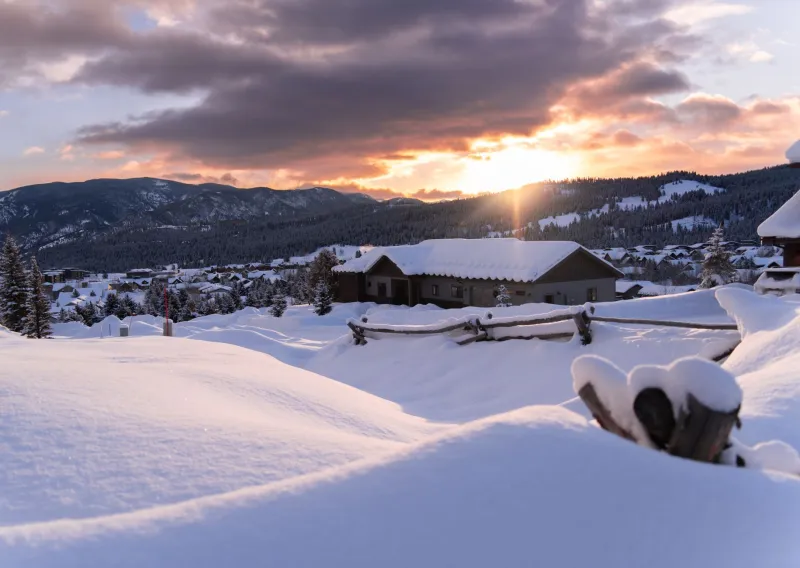
The sign outside the Ringling Post Office is small enough to miss if you blink driving through. The building itself — a modest, weathered structure sitting just off U.S. Highway 89 in Meagher County — is easily overlooked. But for the roughly two dozen full-time residents who call this stretch of central Montana home, that sign represents something far larger than its dimensions suggest. It represents proof that someone, somewhere, still acknowledges they exist.
"When the mail comes, people come," said one longtime Ringling resident who has lived in the area for over four decades. "It's not just letters and packages. It's the one time you see your neighbors. It's how you know the town is still alive."
That sense of institutional permanence is now under threat in Ringling and in dozens of communities like it scattered across Montana's vast interior. As the United States Postal Service grapples with declining mail volumes, aging infrastructure, and mounting financial losses, rural post offices — particularly those serving populations of fewer than one hundred people — have become targets for consolidation or outright closure. For the towns that have already lost theirs, the consequences extend well beyond inconvenience.
A Network Built for a Different Montana
Montana's postal infrastructure was largely designed during an era when homesteaders dotted the high plains and remote valleys by the thousands. Post offices followed settlement, and in many cases, settlement followed post offices. Communities were named after their postmasters. Zip codes became a form of civic identity.
At its peak in the mid-twentieth century, Montana supported hundreds of small post offices serving communities that no longer appear on most commercial maps. Many of those facilities have already been absorbed into larger distribution hubs in Billings, Great Falls, Missoula, and Helena. The consolidations that occurred during the 1970s and 1980s were painful, but the communities affected had other institutions to absorb the social loss — schools, churches, local businesses.
What has changed in the intervening decades is the degree to which those backup institutions have themselves disappeared. In 2025, a post office closure in a town like Ringling or Garneill or Ingomar does not simply remove a convenience. It removes, in many cases, the last remaining public space where residents encounter one another and the outside world simultaneously.
"The post office is the last thing standing in a lot of these places," said a rural policy researcher familiar with USPS operations in the Mountain West. "When you close it, you're not closing a building. You're closing the community."
The Postmaster as Community Anchor
In towns too small to support a full-time postmaster, the Postal Service frequently relies on what it classifies as postmaster relief employees or part-time contract workers — individuals who sort, distribute, and receive mail for a few hours each day, often for wages that would not cover rent in a city. Many of these individuals have held their positions for years, sometimes decades, and have become far more than mail handlers in the eyes of their neighbors.
In one Wheatland County community, the woman who has run the local post office for more than twenty years also serves as an informal emergency contact for elderly residents, a message relay for families without reliable internet, and a first point of contact for anyone seeking directions, local knowledge, or simply human conversation. She asked that her name not be used, citing concerns about drawing attention that might accelerate a closure review.
"I know everyone's name. I know when someone hasn't picked up their mail in three days and something might be wrong," she said. "That's not in my job description. But out here, it's what the job is."
Her post office serves fewer than sixty residents and has been flagged in internal USPS assessments as a candidate for consolidation. Under a proposed reorganization, residents would be directed to a post office approximately thirty-five miles away — a distance that, during a Montana winter, can represent a two-hour round trip under favorable conditions or an impassable route when it is not.
What Closure Actually Looks Like
The town of Shawmut, in Wheatland County, lost its post office in 2012. Residents at the time were assured that mail delivery and P.O. Box access through a nearby facility would preserve their essential services. More than a decade later, former residents and community observers describe a different outcome.
Without the post office, the informal daily gathering point for the community dissolved. Businesses that had depended on foot traffic from postal customers closed. Elderly and mobility-limited residents, unable to drive the distance to the replacement facility, began relying on neighbors and family members in ways that strained those relationships. Several families relocated to larger towns. The school enrollment, already fragile, dropped further.
"It wasn't the only reason people left," acknowledged one former Shawmut resident now living in Harlowton. "But it was the thing that made people feel like the community had given up on itself. Or that the government had given up on it."
That perception — of governmental abandonment — is a recurring theme in conversations with rural Montanans confronting potential post office closures. The USPS is not a private corporation in the minds of most rural residents. It is a federal promise, codified in law and tradition, that even the most isolated American household deserves connection to the national community.
The Federal Calculus
The Postal Service operates under a congressional mandate to provide universal service, a requirement that has historically shielded rural post offices from purely market-driven closure decisions. But the financial pressures bearing down on USPS have intensified that tension considerably.
In recent years, the agency has pursued a strategy of consolidating delivery operations into larger regional facilities while maintaining some retail postal presence in smaller communities through contract postal units — essentially, postal counters inside existing businesses such as general stores or pharmacies. Supporters argue this model preserves basic access while reducing overhead. Critics, including several members of Montana's congressional delegation, contend it fundamentally degrades the quality and reliability of service in communities that have no alternative.
Senator Jon Tester, before his departure from office, was among the most vocal advocates for rural postal protection, frequently citing Montana communities by name during floor debates. His successor faces similar pressure from constituents for whom this issue carries deep practical and symbolic weight.
Holding the Line
In the small community of Judith Gap, residents have organized informally to document the economic and social value of their post office in anticipation of a potential closure review. They have compiled letters, usage statistics, and testimonials from residents who rely on mail delivery for prescription medications, agricultural supplies, and legal correspondence.
"We're not asking for anything special," said one organizer who farms land that has been in her family for three generations. "We're asking for what every American is supposed to have. We pay taxes. We vote. We deserve a post office."
That argument — equal citizenship, equal service — is the one rural Montanans return to again and again. The distances are greater here. The winters are harder. The alternatives are fewer. And the institutions that remain, however modest, carry a weight that is difficult to quantify but impossible to ignore.
For the postmaster in Wheatland County, sorting the day's mail in a building that may not exist in its current form two years from now, the work continues regardless of what federal assessments conclude.
"As long as I'm here, the mail gets delivered," she said. "And as long as the mail gets delivered, this is still a town."