The Invisible Roads: Montana's Pronghorn Are Running Out of Room to Roam
The Invisible Roads: Montana's Pronghorn Are Running Out of Room to Roam
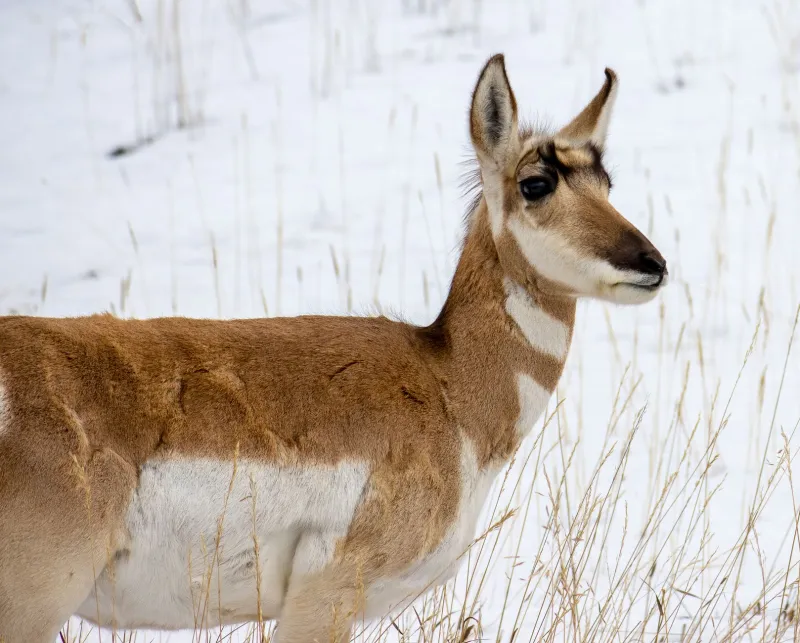
The pronghorn does not read a map. It does not need one. For millennia, these animals — the fastest land mammals in the Western Hemisphere — have navigated Montana's grasslands and sagebrush flats by something older than memory, following migration corridors passed down through generations with a fidelity that biologists still struggle to fully explain. They move south before the deep snows arrive and north again when the grasses green up, tracing pathways that can stretch three hundred miles or more across the state.
But the landscape those corridors cross is no longer the same one that shaped them.
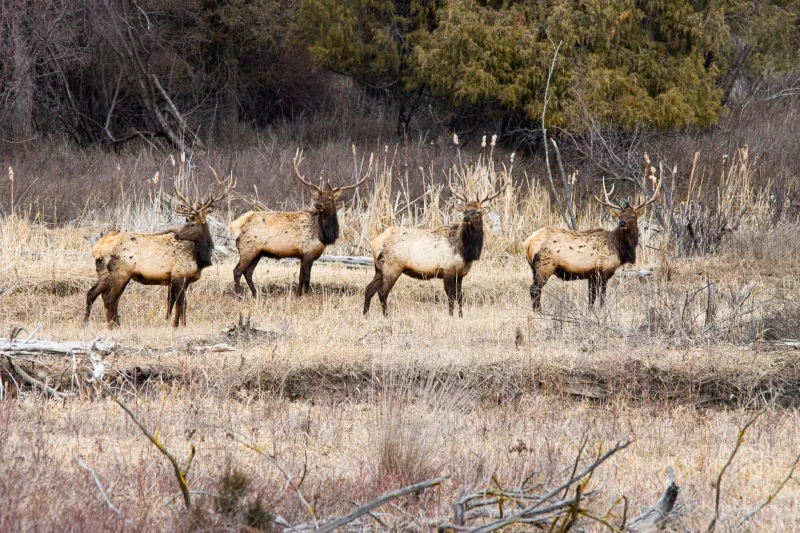
Fences slice across historic travel routes. Subdivisions have consumed river bottoms and valley floors that once served as natural funnels. U.S. Highway 191, cutting diagonally through the heart of central Montana, has become what wildlife managers sometimes call a "wall with traffic" — a barrier that pronghorn, unlike deer or elk, are particularly ill-equipped to navigate. Unlike their counterparts, pronghorn rarely jump. They are built to run under obstacles, not over them, a trait that served them perfectly in a landscape without fences and utterly fails them in one defined by wire.
"They'll pace a fence line for hours," said one Montana Fish, Wildlife and Parks biologist who has tracked pronghorn movements in the Musselshell River corridor for more than a decade. "They can see where they need to go. They just can't get there."
A Corridor Under Pressure
Montana holds one of the largest remaining pronghorn populations in North America, with estimates ranging between 100,000 and 150,000 animals depending on annual surveys and seasonal variation. The species rebounded dramatically from near-extinction in the early twentieth century, a conservation success story that Montanans have long pointed to with justifiable pride.
But population numbers alone do not tell the full story. What matters increasingly to wildlife scientists is not just how many pronghorn exist, but whether they can still move — whether the corridors that connect summer range to winter range, that allow herds to respond to drought and fire and deep snow, remain passable.
Recent GPS collar data collected by researchers at Montana State University and the Wildlife Conservation Society has mapped those corridors with unprecedented precision, revealing both their remarkable consistency and their growing vulnerability. In some stretches, pronghorn funnel through bottlenecks less than a mile wide, threading between subdivisions, irrigation infrastructure, and highway rights-of-way. A single new fence line, researchers note, can effectively close a corridor that has existed for ten thousand years.
The pressure is not coming from any single source. It is cumulative, incremental, and in many cases entirely legal — the product of landowners making reasonable decisions about their own property without any mechanism to account for the broader ecological consequences.
Ranchers, Biologists, and a Difficult Conversation
Not everyone driving fence posts across Montana's plains is indifferent to wildlife. Many ranchers in corridor zones have proven willing partners when approached thoughtfully, and a growing network of voluntary modification programs has demonstrated that livestock management and pronghorn passage are not mutually exclusive goals.
The Wildlife Friendly Fencing initiative, supported in part by the Natural Resources Conservation Service and various state and nonprofit partners, has helped dozens of Montana landowners replace or modify bottom fence wires — raising them from the ground and removing barbed wire on the lowest strand — to allow pronghorn to slide beneath without injury. The modifications cost relatively little and require minimal disruption to normal ranching operations. In areas where the program has taken hold, biologists have documented measurable increases in successful pronghorn crossings.
"Most of the ranchers I've worked with, they grew up watching these animals," said one range conservationist based in Lewistown. "They don't want to see the herds disappear. They just need someone to show them there's a practical option."
The harder conversations involve highway infrastructure. Wildlife crossings — underpasses and overpasses engineered specifically for ungulate passage — have demonstrated remarkable effectiveness in other western states, most notably Wyoming, where a series of crossings along U.S. Highway 189 reduced pronghorn vehicle collisions by more than 80 percent and restored connectivity to a migration route that had been functionally severed for years. Montana has installed a limited number of similar structures, but wildlife advocates argue the pace of implementation has not kept up with the pace of habitat fragmentation.
Funding remains the persistent obstacle. Federal transportation dollars can be directed toward wildlife crossings under certain conditions, but competition for infrastructure resources is fierce, and crossings that benefit pronghorn — a species not currently listed under the Endangered Species Act — can struggle to achieve priority status against projects with more immediate human safety implications.
A Cultural Stake in the Outcome
For Montana's tribal nations, the stakes of this conversation extend well beyond ecology. Pronghorn have occupied a central place in the cultures, diets, and ceremonial traditions of the Northern Cheyenne, Crow, Blackfeet, and other Indigenous peoples of the northern plains for as long as oral histories record. The disruption of migration corridors is not, from that perspective, merely a wildlife management problem — it is the continuation of a longer pattern of landscape alteration that has systematically diminished the living connections between Indigenous communities and the land their ancestors shaped.
Several tribal wildlife programs have begun incorporating pronghorn corridor data into their own land management planning, and representatives from the Crow Nation and the Blackfeet Tribe have participated in multi-stakeholder corridor working groups alongside ranchers, state biologists, and transportation officials. The presence of those voices, participants say, has reframed conversations that might otherwise focus too narrowly on technical solutions.
"When you understand that these animals have been moving through this valley since before there were words for it," one tribal wildlife manager said during a recent corridor planning session in Billings, "you start to think differently about what you're willing to do to keep that going."
The Cost of Inaction
The economic dimensions of pronghorn conservation are not trivial. Montana's hunting license revenues, outfitter industry, and wildlife-based tourism collectively generate hundreds of millions of dollars annually, and pronghorn hunting alone draws thousands of nonresident license holders each year. A sustained decline in herd connectivity — and the population fragmentation that would follow — would carry measurable consequences for the state's outdoor recreation economy.
Beyond the dollars, there is the harder question of what Montana loses when the migrations stop. The pronghorn's annual passage across the open country of central and eastern Montana is one of the last large-scale ungulate migrations remaining in the lower 48 states. It is, by any reasonable measure, a spectacle — and a testament to the degree to which Montana's landscapes have retained something that most of the American West surrendered long ago.
Whether that something can survive the next twenty years of development pressure depends in large part on decisions being made right now, in county planning offices, at fence lines, and in state and federal budget negotiations that rarely make headlines.
The pronghorn, for its part, will keep looking for a way through — until, one day, it cannot find one.