Dead Tracks, Live Debate: Montana's Abandoned Rail Corridors and the Fight Over Their Future
Dead Tracks, Live Debate: Montana's Abandoned Rail Corridors and the Fight Over Their Future
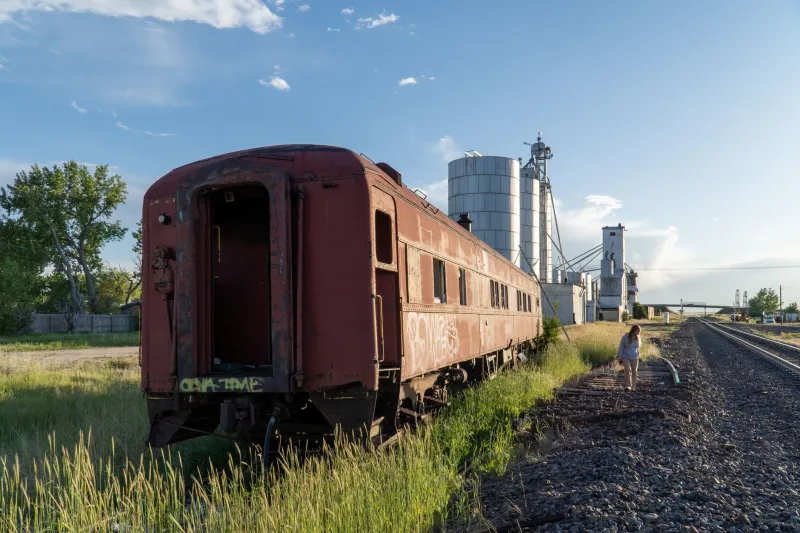
The rusted rails outside of Lewistown don't carry anything anymore — not grain, not coal, not passengers. They simply lie there, half-swallowed by grass and time, tracing the ghost of an economy that once animated the high plains of central Montana. Drive far enough in almost any direction across this state, and you'll find more of the same: iron and timber slowly returning to the earth, mile after mile, corridor after corridor.
Yet these dormant lines are anything but forgotten. Across Montana, a complicated and often contentious conversation is underway about what these abandoned rail corridors could — or should — become. The answers being proposed range from practical to visionary, and the disagreements between those proposing them run deep.
The Scale of What Was Left Behind
At the height of the railroad era, Montana was laced with thousands of miles of track. Lines pushed into remote valleys to haul out timber, ore, and wheat. Depots anchored small communities that might otherwise never have formed. For decades, the rails were as fundamental to Montana life as the rivers.
Then came the consolidations, the regulatory changes, and the long economic shifts of the latter twentieth century. Between the 1970s and the early 2000s, carriers shed unprofitable branch lines at a rapid pace. The Surface Transportation Board oversaw many of these abandonments, and in numerous cases, the corridors were simply relinquished — returned to adjacent landowners, transferred to counties, or left in legal limbo.
Today, estimates suggest that well over a thousand miles of former rail corridor in Montana sit either formally abandoned or functionally inactive. Some segments have already been converted to recreational rail-trails. Others remain in contested ownership. Many exist in a bureaucratic gray zone that has stymied any use at all.
Three Visions, One Set of Tracks
The debate over these corridors rarely produces clean consensus, because the people most invested in the outcome often want entirely different things.
For economic development advocates, the corridors represent untapped freight infrastructure. Reactivating even select segments, they argue, could reduce trucking costs for agricultural producers, ease pressure on deteriorating rural highways, and reconnect grain elevators and livestock operations to national markets. "We're hauling product on roads that weren't built for that weight, burning fuel that cuts into already thin margins," said one Chouteau County grain farmer who asked not to be identified by name. "If there's a rail option, we should at least be having that conversation seriously."
But reactivation is neither simple nor cheap. Rehabilitating abandoned track to federal safety standards can cost anywhere from several hundred thousand to well over a million dollars per mile, depending on the condition of the roadbed and the structures involved. Securing financing, negotiating with landowners, and navigating regulatory requirements can take years before a single car moves.
Recreational advocates offer a different vision. Montana's rail-trail movement has gained momentum in recent years, pointing to successful conversions elsewhere in the West as evidence that former rail corridors can anchor tourism economies and serve rural residents seeking safe, accessible routes through landscapes otherwise difficult to traverse. Proponents note that trail corridors can generate measurable economic activity in gateway communities — lodging, equipment rental, food service — without requiring the capital investment of freight reactivation.
Then there is a third possibility that has attracted particular interest in recent years: using the linear corridors as pathways for broadband infrastructure. The right-of-way already exists, the route often connects communities that lack reliable internet service, and the cost of laying fiber along an established corridor is generally lower than cutting new easements across private land. For communities still struggling with the digital divide, the appeal is evident.
"These corridors are essentially pre-permitted infrastructure routes," said a telecommunications policy researcher familiar with Montana's rural connectivity challenges. "The question isn't whether they have value. The question is who gets to define what that value is."
The Landowner Question
That question has no simple answer, in part because ownership of these corridors is genuinely murky in many cases. Under federal railroad land grant law, many rail right-of-way easements were held only for railroad purposes. When the railroad abandoned the line, legal title in some cases reverted to the adjacent landowners — a process known as fee simple reversion. In other cases, the corridor was held in a different legal form and did not revert.
This ambiguity has produced real conflict. Farmers and ranchers whose land borders former rail lines sometimes believe, with reasonable legal basis, that they already own the corridor. Proposals to convert those same corridors to trails or broadband routes without their consent have generated significant opposition in some counties.
"My family has been farming that ground for four generations," said one rancher in the Judith Basin area. "The railroad left. As far as we're concerned, that land came back to us. Someone showing up and saying they want to run a bike trail through it — or string cable — without so much as a conversation, that's not how things work out here."
Legal disputes over corridor ownership have wound through Montana courts for years, and federal legislation — most notably the National Trails System Act's railbanking provision — has added another layer of complexity. Railbanking allows a corridor to be held in trust for possible future rail use while being used as a trail in the interim, but critics argue the provision has been used to effectively transfer private land rights without adequate compensation.
Small Towns in the Middle
For the mayors and commissioners of Montana's smaller communities, the rail corridor debate is less a philosophical argument than a practical one. These are towns watching their tax bases shrink, their young people leave, and their infrastructure age. If an abandoned rail line running through or near their community could be part of a solution — any solution — they want to know about it.
"We're not ideological about this," said the mayor of one small north-central Montana town, who asked that the community not be named to avoid complicating ongoing discussions with state agencies. "If freight makes sense, let's talk freight. If broadband makes more sense right now, let's talk broadband. What we can't afford is for these corridors to just sit there for another thirty years while everyone argues."
State officials have acknowledged the issue in broad terms, but comprehensive policy addressing Montana's abandoned rail corridors remains elusive. The Montana Department of Transportation has engaged in corridor preservation studies, and the state's broadband planning efforts have identified rail routes as potential infrastructure pathways. Whether those acknowledgments translate into action — and who leads that action — remains unresolved.
What the Rails Remember
There is something telling about the way Montanans talk about these old lines. Even those who have no particular stake in their future often speak of them with a kind of recognition — as markers of a time when the state's relationship with the wider economy was more direct, when a town's survival was literally tied to whether a line ran through it.
Railroad historians who have spent careers documenting Montana's rail heritage argue that the corridors carry meaning beyond their economic function. They are physical records of settlement patterns, of corporate decisions, of federal land policy, and of the communities that rose and fell in the railroad's wake.
"You can read the history of this state in where those lines went and why they stopped," said one historian based in Helena who has written extensively on Montana's rail era. "The question now is whether that history becomes a resource for the future or just a footnote."
The tracks outside Lewistown won't answer that question on their own. But the people living closest to them — the farmers, the mayors, the ranchers, the broadband advocates — are no longer content to wait for someone else to ask it.