Letters from the Floorboards: Montana Families Unearth the Records Their Ancestors Left Behind
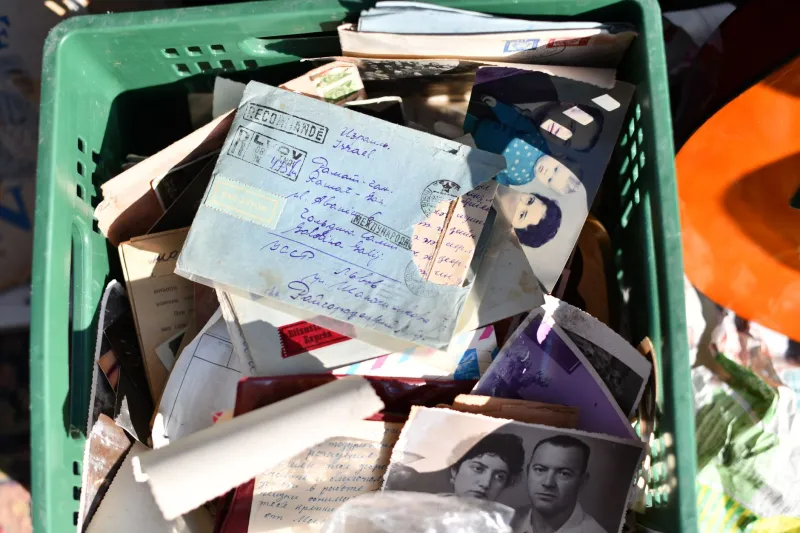
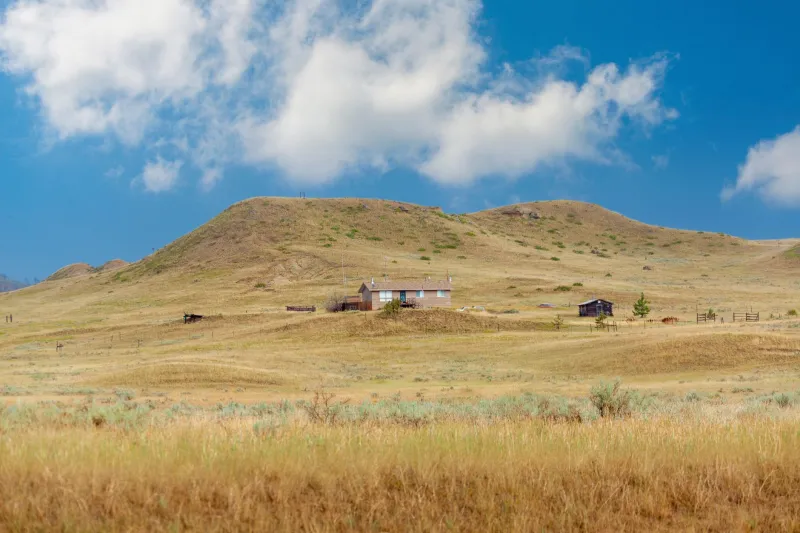
The envelope had been tucked between the original pine subfloor and a later layer of linoleum, sealed well enough to survive nearly ninety years in an unheated farmhouse east of Chinook. When Patricia Heikkinen pulled it free during a renovation project two summers ago, the paper inside was brittle but legible — a letter written in Finnish, dated March of 1934, from a woman named Aino to her sister still living outside Tampere.
Heikkinen does not read Finnish. She photographed every page and sent the images to a translator she found through an online genealogy forum. What came back changed the way she understood her own family's history.
The letter described a winter so severe that the family's well froze solid for six weeks. It described a neighbor's child who had died of something the writer called "the lung sickness." It described the particular loneliness of a prairie Sunday when the nearest Lutheran church was twelve miles away on roads that could not be traveled. And it described, in its final paragraph, a stubborn and almost defiant love for a place that had given the writer's family almost nothing except the chance to remain.
"She wrote that the land was cruel but that it was theirs," Heikkinen said, sitting at her kitchen table with a photocopy of the translated text. "That sentence stopped me. Because we always talk about homesteaders like they were brave pioneers in some storybook. But she was just a woman who was cold and scared and trying to hold her family together. That feels more true to me."
A Movement Growing Quietly Across the State
Heikkinen is one of a growing number of Montanans who have stumbled into — or deliberately pursued — the recovery of primary documents from homestead-era properties. The movement does not have a formal name or a central organization. It exists in genealogy societies from Libby to Baker, in county historical societies operating out of repurposed storefronts, and in the personal archives of individuals who have made it their private mission to ensure that a particular family's story does not vanish when the last person who remembers it is gone.
What draws these people together is a shared recognition that Montana's written history — the published histories, the museum exhibits, the interpretive signage at state parks — has tended toward a particular kind of narrative. Cattle barons and railroad magnates, cavalry campaigns and territorial politics, the mythologized solitude of the cowboy. That narrative is not false, exactly, but it is selective. The Finnish immigrant woman writing to her sister in 1934, the Norwegian bachelor farmer who kept a careful diary of wheat prices and weather, the wife of a dry-land homesteader who recorded in a school composition book every dollar the family spent and every dollar it failed to earn — these figures and their documents have not fit comfortably into the standard telling.
They are beginning to fit now, partly because the people recovering their records are insisting on it.
The Archivists Doing the Work
Dennis Volkov has spent eleven years photographing and cataloging documents recovered from properties in Custer and Rosebud counties. He is a retired high school history teacher who describes his project with a matter-of-fact precision that belies its emotional weight. His digital archive now contains images of more than 4,200 individual documents — deeds, letters, receipts, court filings, photographs, and in several cases entire diaries.
His method is simple but labor-intensive. When he hears that an old homestead property is being sold, renovated, or demolished, he contacts the current owner and asks permission to look. Most owners say yes. Some are indifferent. A few are actively grateful, having worried about what to do with a shoebox of papers they cannot read or contextualize.
"The demolition timeline is the thing that drives me," Volkov said, standing in the front room of a property outside Forsyth whose owner has given him access before a planned teardown. The wallpaper was coming away from the plaster in long strips, revealing layers beneath — floral patterns from different decades, one beneath another like geological strata. "Once the bulldozer comes, it's gone. You don't get a second chance."
He pulled on latex gloves and began working along the baseboard with a flat tool, checking for the gap between floor layers where documents were sometimes stored — not deliberately hidden, he explains, but placed there for temporary safekeeping and then forgotten as the years accumulated.
On this particular afternoon, he found nothing. That happens more often than not. But the frequency of his finds elsewhere has been sufficient to sustain the effort. In a property outside Broadus last spring, he recovered a complete set of original land entry documents for a claim filed in 1911, along with thirty-one personal letters and a hand-drawn map of the family's water sources. The letters were written in Ukrainian.
What the Documents Reveal
The picture that emerges from these recovered records is considerably more diverse — ethnically, economically, and experientially — than Montana's popular historical image tends to suggest.
The homestead era, concentrated roughly between the 1880s and the drought and Depression years of the 1920s and 1930s, drew settlers from across Europe and from other parts of the United States in waves that were shaped by railroad promotion, federal land policy, and the particular desperation of people who had few other options. Scandinavians, Germans from Russia, Czechs, Poles, Ukrainians, and Finns arrived in significant numbers and settled in clusters that gave certain townships a linguistic and cultural character that persisted for generations.
Their documents reflect lives shaped by forces largely outside their control — commodity prices set in Chicago, rainfall patterns that bore no relationship to the promises in railroad brochures, federal policies that alternately encouraged and devastated small agricultural operations. The letters that survive are often striking in their directness about hardship, in contrast to the stoic public persona that frontier mythology has assigned to the homesteader type.
Susan Farwell, who coordinates the historical collections program at the Blaine County Museum in Chinook, has processed several donations originating from the kind of discovery Heikkinen made in her farmhouse floor. She notes that the documents most likely to survive are those that were, by chance, stored in conditions that limited moisture and temperature fluctuation — which often means the least-used corners of the most solidly built structures.
"The irony is that the families who built the best houses are the ones whose records we have," she said. "The families who were most desperate, who built quickly and cheaply and moved on when the land failed them — we often have almost nothing. Their absence in the archive is itself a kind of historical record."
Preserving What Remains
The practical challenges of preservation are significant. Personal documents recovered from private properties have no automatic institutional home. County historical societies often lack the staff, funding, and climate-controlled storage to accept large collections. State and university archives have formal acquisition processes that can be slow and selective.
Volkov donates digital copies of everything he finds to the Montana Historical Society and to the relevant county historical organization, retaining no originals. He encourages property owners to donate physical documents to institutional collections, though he acknowledges that the outcome varies. Some originals end up properly conserved. Others remain in private hands, vulnerable to the same deterioration that claimed so many of their predecessors.
For Heikkinen, the question of what to do with her grandmother's letter — or rather, her grandmother's grandmother's letter, as she has established through subsequent research — resolved itself in a particular way. She had it professionally conserved, framed, and hung in her living room. Beside it, she placed the translation.
Visitors who notice it sometimes ask about it. She tells them about Aino, about the frozen well, about the child who died of the lung sickness, about the stubborn love for a cruel piece of land.
"People think Montana history is cowboys and mountains," she said. "But it's also a Finnish woman writing to her sister in the dark in the middle of winter, trying to explain why she stayed. That's Montana too. That might be the most Montana thing of all."