Ice, Identity, and an Uncertain Tomorrow: Glacier National Park Faces Its Final Melt
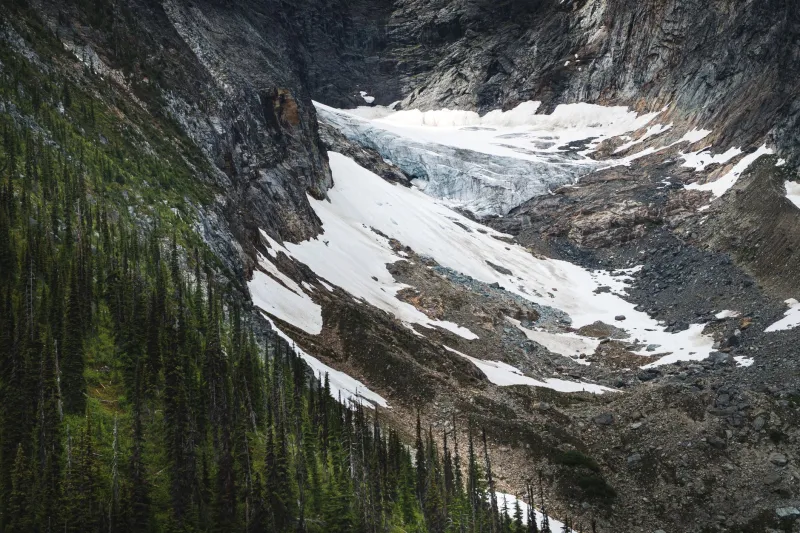
The glaciers that gave Glacier National Park its name are leaving. Not as a forecast, not as a distant hypothetical — but as a measurable, documented, ongoing reality that rangers, hydrologists, and tribal elders are watching unfold in real time. When the park was established in 1910, more than 150 glaciers carved through its peaks. Today, fewer than 25 meet the scientific threshold to be classified as glaciers at all. Researchers at the United States Geological Survey project that, under current warming trajectories, those remaining bodies of ice could vanish entirely within the next three decades.
For Montana, that is not merely an environmental statistic. It is an identity crisis.
A Park Built on Ice
Glacier National Park draws more than three million visitors annually, contributing hundreds of millions of dollars to the regional economy. Hotels in Whitefish and Kalispell fill each summer. Outfitters, guides, and small restaurants in communities like St. Mary and Babb depend on the steady pulse of tourism that the park generates. The glaciers themselves — Grinnell, Jackson, Sperry — are not incidental to that draw. They are the draw.
"People come here specifically to see them," said one park ranger who has worked in the Going-to-the-Sun corridor for more than a decade. "When I tell visitors that what they're looking at may not be here when their children come back, some of them don't believe me. Others just go quiet."
That silence carries weight. It reflects a tension that runs through nearly every conversation about the park's future — between what science says is happening and what many residents and business owners find difficult to accept or, more practically, difficult to plan around.
Downstream Consequences
The concern extends well beyond the park's boundaries. Montana's rivers — the Flathead, the St. Mary, the Milk — draw critical late-summer flow from glacial melt. For ranchers operating in the plains east of the Continental Divide, that water is not scenic. It is functional. It sustains livestock, irrigates hay fields, and keeps small-town water systems viable through dry August months when rainfall alone cannot carry the burden.
Dr. Lisa Hanford, a hydrologist based in Missoula who has spent years studying glacial contribution to Montana's river systems, explained the dynamic in plain terms. "Glaciers act as a natural reservoir," she said. "They store water during wet and cold periods and release it slowly during the hottest, driest parts of the year — precisely when demand is highest. When those reservoirs are gone, the timing and volume of that late-season flow changes significantly."
Her research suggests that some river reaches east of the park could see late-summer flows reduced by as much as 30 percent within decades, a figure that carries serious implications for agricultural operations that have organized their entire year around current water availability.
For ranchers already navigating volatile commodity markets and escalating land costs, that projection adds another layer of uncertainty to an already precarious livelihood. "We've been running cattle on this land for four generations," said one rancher near Cut Bank who asked not to be identified by name. "I'm not saying I know everything about climate. But I know my creek, and I know it's running lower in September than it used to. That's not politics. That's just what I see."
Tribal Nations and a Deeper Loss
For members of the Blackfeet Nation, whose ancestral territory encompasses lands adjacent to the park's eastern boundary, the disappearance of the glaciers carries a dimension that transcends economics. The ice and the mountains it adorns hold spiritual and cultural significance that stretches back far beyond the park's formal establishment — a designation that itself displaced Indigenous land use and governance.
"We call these mountains the Backbone of the World," said one Blackfeet cultural liaison who works with both the tribe and park service on interpretive programming. "The ice is part of that backbone. When it goes, something is lost that cannot be replaced by a visitor center exhibit or a commemorative plaque."
Tribal members have also noted changes in plant communities, wildlife movement, and water availability that align with what scientists are measuring. For communities whose relationship with this landscape is relational rather than recreational, the transformation is experienced as a kind of ongoing grief.
The Economy of Denial and the Politics of Uncertainty
Not everyone in the region accepts the scientific projections without skepticism, and in a state where federal land management has long been a source of friction, distrust of institutional pronouncements runs deep. Some business owners worry that emphasizing glacial loss could itself suppress tourism — that telling visitors the ice is disappearing functions as a deterrent rather than a call to action.
"There's a real fear that if you market this place as a dying landmark, people stop coming," said the owner of a lodging operation near the park's west entrance. "I understand the science. I'm not dismissing it. But I also have employees who need paychecks, and I'm not sure 'come see it before it's gone' is a sustainable business model."
Park service officials have attempted to navigate this tension carefully, framing glacial change as part of a broader interpretive mission rather than a doomsday narrative. Signage and ranger-led programs now incorporate climate data directly, offering visitors a factual account of what they are seeing and what projections suggest. It is an approach that has drawn both praise from environmental advocates and quiet criticism from some local business associations who believe the messaging is unnecessarily alarming.
What Comes After the Ice
The question that lingers over every conversation about Glacier's future is also the most difficult one: what does Montana become when its most iconic natural feature is gone?
Some researchers suggest that the landscape will remain visually dramatic — the carved peaks, the turquoise lakes, the sweeping valleys are products of glaciation that occurred over millennia and will not disappear with the remaining ice. Tourism, they argue, may prove more resilient than feared. Others are less optimistic about the downstream effects on agriculture and municipal water systems, and urge immediate investment in water storage infrastructure and conservation programs.
Tribal voices call for a reckoning that goes beyond infrastructure — an honest acknowledgment that the choices driving glacial loss are collective, and that the communities least responsible for those choices are often the most exposed to their consequences.
For the rangers who walk those high trails each summer, the work of bearing witness continues. "I still think this is the most extraordinary place in the country," one said, pausing near the overlook above Grinnell Glacier. "But I also think honesty is part of the job. People deserve to know what's happening here. Montana deserves that."
The ice will not wait for a political consensus. It is already going. The question now is whether Montana — its communities, its economy, its identity — is preparing for the world that comes after.