Graveyard Shift at the Power Plant: Montana's Coal Facilities Face a Worker Shortage with No Easy Fix
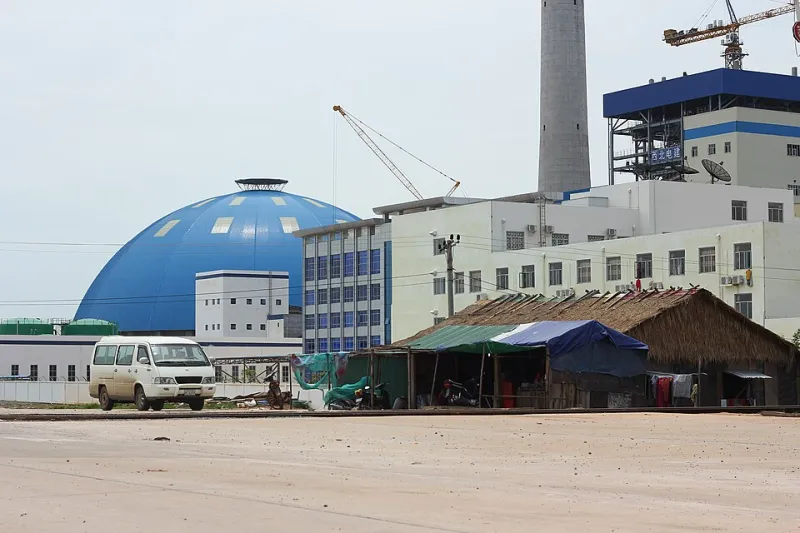
Photo: Dmitry Makeev, CC BY-SA 4.0, via Wikimedia Commons
The Colstrip Generating Station rises from the southeastern Montana plains with a presence that is difficult to ignore — four units, two of which remain operational, and a legacy woven so deeply into the fabric of the surrounding community that the town shares its name with the facility. On a weekday morning, the parking lot outside the main gate tells a story that plant management has been reluctant to discuss publicly: there are far fewer vehicles than there used to be.
"We're not where we need to be on staffing," acknowledged a senior operations employee who agreed to speak on background. "And it's not for lack of trying."
A Workforce Growing Older
Across Montana's remaining coal-fired generating facilities, the demographic picture is consistent and concerning. The median age of plant workers has risen steadily over the past decade as retirements have outpaced new hires. In exit interviews and informal conversations, departing employees cite a familiar set of reasons for not being replaced by younger workers: the physical demands of industrial shift work, the perceived instability of an industry under regulatory and market pressure, and the availability of alternative employment in growing sectors that offer comparable wages without the same risk profile.
The average age of a power plant operator in Montana's coal sector now hovers in the mid-to-late forties, according to estimates from industry representatives and union officials. In a field where institutional knowledge — the kind built over years of working specific equipment in specific conditions — is essential to safe operations, an aging workforce represents a vulnerability that goes beyond simple headcount.
"These plants are not plug-and-play," said a representative of the International Brotherhood of Electrical Workers, which represents workers at several Montana generating facilities. "You have guys who know every quirk of every piece of equipment in that building. When they walk out the door, that knowledge does not automatically transfer."
The Recruiting Problem
Plant operators and their parent companies have pursued a range of strategies to attract new workers, with mixed results. Signing bonuses, apprenticeship programs, and partnerships with Montana's community colleges have generated some interest, but retention remains a persistent challenge. Several recruits who completed training programs have departed within their first two years, drawn to positions in other industries or, in some cases, to jobs at wind and solar installations that offer comparable entry-level pay in a sector with more visible long-term growth.
"I trained for this job, I liked the work, but I kept thinking about where it was headed," said one former plant employee who left a coal facility position in 2022 for a role with a renewable energy company operating in central Montana. "It's not just about the paycheck. It's about whether you're going to have a job in ten years."
That perception — regardless of its accuracy in any given case — has become one of the most significant obstacles plant recruiters face. Montana's coal-fired capacity has declined as units at Colstrip and elsewhere have been retired, and while the remaining units are expected to continue operating for years, the broader narrative of coal's decline in the American energy mix shapes how prospective workers evaluate their options.
Safety in the Margins
Beyond the operational and economic implications, the staffing shortage raises questions about safety at facilities that handle high-pressure steam systems, high-voltage electrical equipment, and large volumes of combustion byproducts. Regulatory requirements establish minimum staffing levels for certain functions, but those minimums were designed as floors, not optimal operating conditions.
When experienced workers are spread thin across shifts, the margin for error narrows. Fatigue becomes a factor. Institutional knowledge that would normally be distributed across a team concentrates in fewer individuals, creating single points of failure in the human infrastructure of plant operations.
"We follow every requirement," said a plant manager at a generating facility in eastern Montana who agreed to speak generally about industry conditions. "But requirements are a minimum, not a standard. There's a difference between compliant and comfortable, and right now we're closer to compliant."
The Montana Department of Environmental Quality and the federal Occupational Safety and Health Administration both conduct inspections at the state's coal facilities, but neither agency confirmed specific findings related to staffing levels at individual plants for this report.
The Towns in the Balance
For communities like Colstrip, the workforce crisis at the plant is inseparable from the broader question of what the town becomes if the facility's operational life ends sooner than expected — or simply winds down through attrition rather than a formal closure decision.
Colstrip's population has declined significantly from its peak in the 1980s, and civic institutions — schools, businesses, municipal services — have contracted accordingly. Residents who have remained through previous rounds of uncertainty express a mixture of pragmatism and determination that is characteristic of rural Montana communities that have weathered difficult cycles before.
"People here are not naive about what the plant is," said a longtime Colstrip resident who works in a service business dependent on plant employee patronage. "They know it's not forever. But right now it's still running, it still employs people, and those people still live here and spend money here. Every year it keeps going is another year."
State officials and economic development agencies have explored transition planning for coal-dependent communities, but those conversations have proceeded slowly, and residents in affected towns frequently express frustration that planning for the future seems to come at the expense of attention to the present.
For the workers who show up for overnight shifts at Montana's coal plants — checking gauges, managing systems, and carrying the accumulated expertise of careers spent in industrial work — the future is a question they have learned to set aside. The shift in front of them is the one that matters. Whether enough people will keep showing up to take those shifts is a question Montana may not be able to defer much longer.