Against Forgetting: Montana's Small-Town Librarians Race to Save What No Algorithm Can Recover
Photo: Sergei Prokudin-Gorskii, Public domain, via Wikimedia Commons
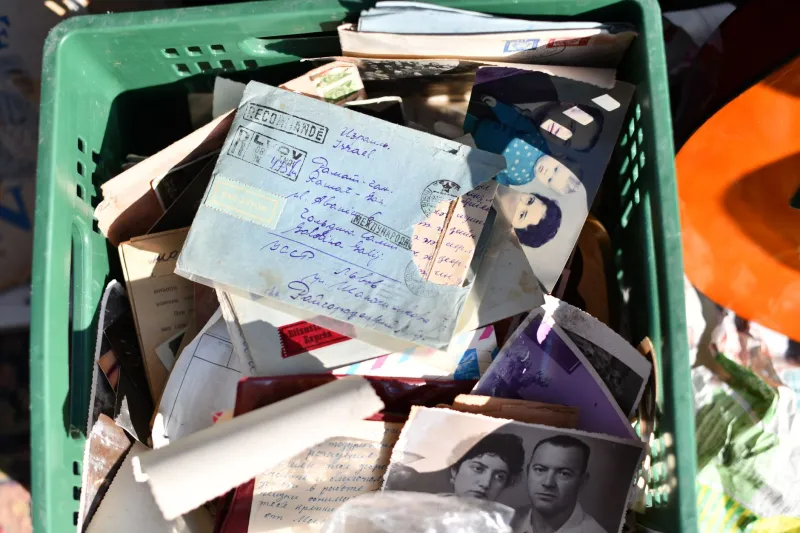
The photograph is roughly four inches square, printed on paper that has turned the color of weak tea. It shows a group of men standing in front of a building that no longer exists, in a town that barely does. On the back, in pencil so faint it requires a magnifying glass, someone has written a list of names. The photograph has been in the Powder River County Library for decades. Until two years ago, it had never been catalogued. Until last spring, it had never been digitized.
Now it is both — searchable, backed up, and accessible to anyone with an internet connection and a reason to look. The person responsible for that transformation is the library's director, who accomplished it during her lunch breaks over the course of several months, using equipment purchased with a grant she wrote herself at her kitchen table.
The Archives No One Else Is Keeping
Montana's small-town and rural libraries hold collections that do not exist anywhere else. County histories assembled by local historical societies before such societies disbanded. Newspaper archives from publications that ceased printing before microfilm was invented. Handwritten land survey records. Church registers. School photographs spanning eight decades. Oral history recordings made on cassette tape by volunteers who understood, even then, that the people they were interviewing would not be around much longer.
None of this material appears in any national database. Much of it is not referenced in any finding aid accessible outside the library that holds it. Some of it is deteriorating.
"People assume that if something is historically significant, someone has already preserved it," says Carol Whitman, who has directed the Musselshell County Library for fourteen years. "That assumption is wrong in a lot of places, and it is especially wrong in rural Montana. We are frequently the only institution that has ever cared about this material."
Whitman's library holds, among other things, the only surviving run of a weekly newspaper published in her county between 1912 and 1941. The physical copies are fragile enough that she asks researchers to wear cotton gloves when handling them. She has been working on digitizing the collection for three years. At her current pace, she estimates she will finish in another four, assuming the paper does not deteriorate faster than she can work.
Funding That Doesn't Match the Task
The financial reality of Montana's rural library system is a persistent constraint on preservation work. State library funding, distributed through the Montana State Library, has remained relatively flat in recent budget cycles even as the cost of digitization equipment, archival storage materials, and trained staff has increased. Federal Library Services and Technology Act grants, administered at the state level, provide some supplemental support, but competition for those funds is significant and award amounts rarely cover the full scope of preservation needs.
Many small Montana libraries operate with a single full-time staff member and a rotating cast of volunteers. Preservation work — the kind that involves carefully unfolding a brittle document, scanning it at archival resolution, creating accurate metadata, and uploading it to a stable long-term repository — is time-consuming and technically demanding. It competes directly with the other obligations of a library that is also expected to serve as a community meeting space, a children's programming venue, a public internet access point, and a reference service.
"I am one person," says James Rutherford, who runs a two-room library in a small town in the Bitterroot Valley. "I do everything. When I am helping a patron, I am not scanning. When I am scanning, I am not helping a patron. There are only so many hours."
Rutherford has, despite those constraints, digitized more than 800 photographs from his library's local history collection and made them available through a state digital repository. He did most of the work on Saturdays, when the library is technically closed but he is often there anyway.
The Genealogy Dimension
One of the most consistent drivers of interest in rural Montana library archives is genealogical research. Montana's settlement history — waves of homesteaders, miners, railroad workers, and ranching families arriving in compressed bursts between the 1880s and the 1920s — created communities that were deeply documented at the local level even when they left little trace in national records.
For descendants of those families, many of whom now live far from Montana, the local library is often the only institution that can help them find evidence of their ancestors' lives. Birth records. Cemetery registries. Homestead claim filings. Newspaper accounts of events that would have been invisible to any recorder operating at a distance.
"I get emails from people in California, in Texas, in Germany," says Whitman. "They are looking for great-grandparents who filed on land in this county in 1910. Sometimes I can find something for them. Sometimes I can find quite a lot. And I think about what happens when I'm not here, or when this library's funding gets cut to the point where nobody is doing this work anymore."
The question she raises is not hypothetical. Several small Montana libraries have reduced hours significantly in recent years due to funding constraints. At least two have temporarily closed. Each closure creates a gap in access to collections that have no duplicate.
Digital Preservation and Its Limits
The push to digitize local historical collections is widely understood as the most urgent preservation priority, but digitization is not a permanent solution — it is a transfer of the problem into a different medium. Digital files require ongoing maintenance, format migration as technology evolves, and stable server infrastructure to remain accessible. Small libraries that successfully digitize their collections often lack the resources to ensure long-term digital preservation.
The Montana State Library has worked to address this by hosting a shared digital repository that smaller institutions can contribute to, reducing the infrastructure burden on individual libraries. The program has expanded the number of digitized Montana historical collections available online. It has not eliminated the backlog of undigitized material, which remains substantial.
"Digitization is not the finish line," says Dr. Helen Pryce, a preservation librarian at the University of Montana who has consulted with rural libraries on archival projects. "It is a step. The finish line is a stable, funded, maintained system that keeps this material accessible for the next hundred years. We are not there yet."
What Is Lost When the Doors Close
The librarians who spoke with Montana's News were unanimous on one point: the loss of a small-town library is not equivalent to the loss of a branch of a larger system. It is the loss of an institution that holds knowledge no other institution holds, maintained by people whose professional identity is inseparable from their commitment to the communities they serve.
Elaine Hofer — no relation to the telephone operator — has been the head librarian in a small Hill County community for twenty-two years. She can describe, from memory, the contents of nearly every box in her library's local history room. She knows which collections have been donated, by whom, and under what conditions. She knows which materials are fragile, which are duplicated elsewhere, and which exist in her library alone.
When she retires, that knowledge will leave with her unless it has been systematically documented — a project she is currently undertaking, writing finding aids for collections that have never had them, creating the institutional record that will allow whoever comes next to understand what they are inheriting.
"I am trying to write everything down," she says, seated at a table surrounded by archival boxes, a laptop open beside her. "Because if I don't, and if something happens to this library, none of this will make sense to anyone who comes after. And then it's just boxes."
In Montana's smallest communities, the distance between a box of documents and a piece of living history is often a single librarian. The state is fortunate, for now, that so many of them are still working.