Prior Rights, Present Losses: Montana's Family Irrigators Watch Their Water Slip Away
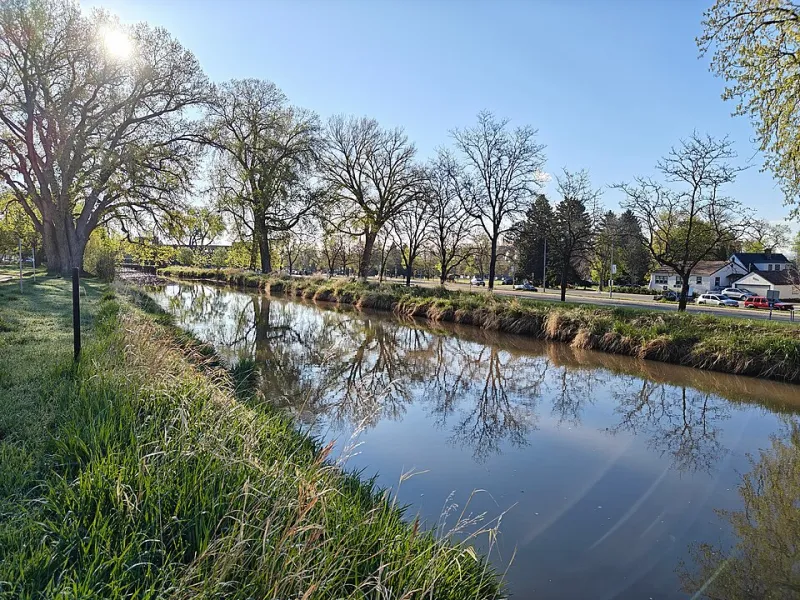
Photo: Chevsapher, CC0, via Wikimedia Commons
The ditch that runs along the eastern edge of Carl Metzger's alfalfa fields outside Townsend has carried water from the Missouri River since his great-grandfather filed the original appropriation claim in 1901. The paper documenting that claim, framed and hung in the farmhouse kitchen, is among the oldest artifacts in the family's possession — older than the house itself, older than the state's water court system, older than most of the legal machinery now being used to contest it.
"We were here first," Metzger said, standing at the headgate on a dry afternoon in late summer. "That's supposed to mean something in Montana."
Under the prior appropriation doctrine that governs water law across most of the American West, it does — in theory. Seniority of water rights, established by the date of original appropriation and the principle of "first in time, first in right," was designed precisely to protect irrigators like Metzger from being left dry when water grows scarce. In practice, that protection has become increasingly difficult to assert.
The Quiet Accumulation
Over the past two decades, large agricultural corporations and investment-backed farming operations have acquired significant acreage across Montana's most productive river valleys — the Yellowstone, the Gallatin, the Bitterroot, and the Sun River corridor among them. With that land has come water rights, both through direct purchase and through the acquisition of operations that held senior appropriation dates.
The result, documented in water court filings and county deed records reviewed by Montana's News, is a gradual consolidation of senior water rights into fewer and larger hands. In some basins, a single corporate entity now holds appropriation claims that span multiple tributaries and pre-date the holdings of dozens of neighboring family operations.
"The doctrine hasn't changed," said a water law attorney based in Helena who represents small-scale irrigators. "What's changed is who has the resources to enforce it, litigate over it, and strategically acquire it."
A System Under Pressure
Montana's water adjudication process — the formal legal proceeding through which the state determines, ranks, and issues decrees for all existing water rights — has been ongoing since 1979 and remains incomplete in several major basins. Until final decrees are issued, water rights exist in a state of legal uncertainty that can be exploited by parties with the legal resources to file objections, request hearings, and challenge the claimed priority dates of neighboring appropriators.
Family irrigators, many of whom operate on margins that leave little room for legal fees, frequently find themselves unable to defend claims that are, on their face, perfectly valid. Some have accepted negotiated settlements that reduced their allocated volumes. Others have watched senior claims go uncontested while they lacked the resources to participate meaningfully in the adjudication process.
"I got a notice that someone was objecting to part of my claim," said a wheat and barley farmer in the Milk River basin who asked that his name not be used while litigation remains pending. "My attorney told me it would cost more to fight it than to settle. So I settled. I gave up water my family has used for eighty years."
The Montana Department of Natural Resources and Conservation, which administers the state's water rights system, acknowledges the adjudication backlog and its consequences but notes that the agency operates within the constraints of its statutory mandate and available resources.
Corporate Strategy and Agricultural Consolidation
For some larger agricultural operations, water rights acquisition is not incidental to land purchases — it is the primary objective. In an era of increasing drought frequency and growing uncertainty about long-term precipitation patterns across the Northern Rockies, senior water rights in productive basins represent a form of strategic asset that appreciates independently of commodity prices.
Several agricultural economists and water policy researchers who spoke with Montana's News described a pattern in which corporate buyers pay premiums for properties with senior appropriation dates, then use those rights — or the threat of asserting them — to gain negotiating leverage over neighboring irrigators during low-water years.
"Water is the limiting factor for agriculture in the West, full stop," said one researcher at a Montana university who studies agricultural land markets. "When water becomes scarce enough, the senior right holder is in an extraordinarily powerful position. Acquiring those rights is rational behavior for a large operation with a long investment horizon."
What Is Being Lost
The stakes extend beyond individual farm operations. In many of Montana's smaller agricultural communities, family irrigators anchor local economies in ways that corporate farming operations typically do not. They patronize local implement dealers, hire local labor, participate in irrigation district governance, and make long-term investments in the infrastructure — headgates, ditches, laterals — that distributes water across entire valleys.
When those operations consolidate or disappear, the community infrastructure they supported tends to follow. Irrigation districts struggle to maintain quorums. Ditch maintenance falls behind. The institutional knowledge of how water moves through a particular valley in a particular year — knowledge accumulated over generations — disperses and does not reassemble.
"My grandfather knew this ditch the way he knew his own property," said a third-generation irrigator in the Bitterroot Valley. "He knew where it ran slow in July and where it always needed cleaning in March. That's not written down anywhere. When we're gone, it's gone."
Montana's legislature has considered, and in some sessions passed, measures intended to strengthen protections for agricultural water rights and limit speculative acquisitions. Whether those measures are sufficient to alter the trajectory of consolidation in the state's most contested basins remains an open question — one that will likely be answered not in the legislature, but in the water courts, one objection at a time.