One Dispatcher, Three Counties, No Backup: The Fraying Lifeline of Montana's Rural 911 Centers
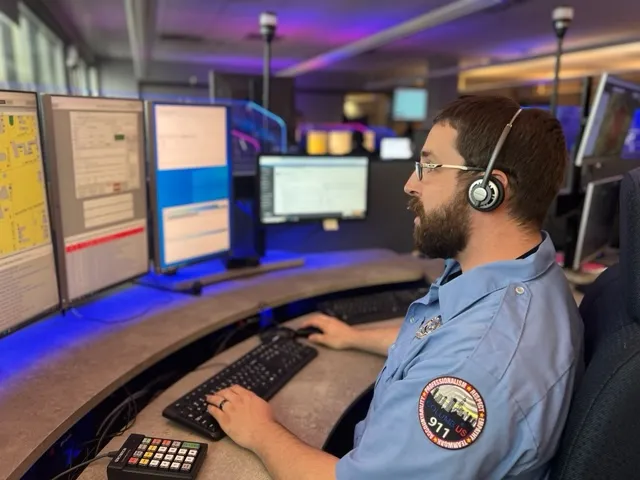
Photo: rural 911 dispatch center emergency communications operator Montana, via cdn.prod.website-files.com
On a January night in Petroleum County — one of the least populated counties in the contiguous United States — a single emergency dispatcher received three calls within eleven minutes. A rollover accident on a county road. A structure fire near a farmstead outside Winnett. A medical emergency at a residence with no street address on record.
There was no supervisor to consult. No second dispatcher to split the load. Just one person, a headset, and a computer terminal that county officials acknowledge is well past its recommended service life.
"You make decisions in seconds that you'll think about for years," said one veteran dispatcher who asked not to be identified by name, citing concerns about public perception of the agency she serves. "And you make them alone."
A System Built for a Different Era
Montana's rural 911 infrastructure was largely assembled in the 1990s and early 2000s, designed around population densities and call volumes that, in many counties, have only declined since. What has not declined is the geographic scope these systems must cover. Garfield County encompasses more than 4,600 square miles. Beaverhead County is larger than the state of Connecticut. In both, emergency dispatch operations run with staffing levels that urban counterparts would consider skeletal.
A review of county budget documents and staffing records obtained by Montana's News found that at least a dozen rural counties in the state operate their primary public safety answering points — the technical designation for 911 dispatch centers — with fewer than four full-time equivalent dispatchers. Several rely on part-time employees or cross-trained sheriff's office staff to fill overnight and weekend shifts.
The consequences are not hypothetical. In 2022, a dispatch center in a central Montana county experienced a gap in coverage when a dispatcher called in sick and no replacement could be reached. Calls during that window were routed to a neighboring county's center, adding critical minutes to response coordination. No fatalities were attributed to the gap, but local officials described the situation in internal communications as "unacceptable and unsustainable."
Technology Left Behind
Beyond staffing, the equipment itself presents serious vulnerabilities. Montana's transition to Next Generation 911 — the federally encouraged upgrade that allows dispatchers to receive text messages, photos, and precise GPS data from callers — has proceeded unevenly across the state's 56 counties.
As of the most recent assessment by the Montana 911 Advisory Council, more than a third of the state's rural dispatch centers have not fully implemented NG911 capabilities. Some continue to operate on legacy analog systems that cannot receive text-to-911 messages, a function that has become essential for callers in domestic violence situations, medical emergencies where speaking is impossible, or areas where voice calls drop but data connections persist.
"We're asking these dispatchers to do more with less, and then we're handing them tools from twenty years ago," said a telecommunications consultant who has worked with several Montana counties on infrastructure assessments. "It's not a staffing problem or a technology problem in isolation. It's both, compounding each other."
Funding for 911 infrastructure in Montana flows through a combination of state surcharges on telephone lines, federal grants, and county general funds. Rural counties, with smaller tax bases and diminishing landline subscriber counts — the traditional source of 911 surcharge revenue — face a structural disadvantage that no amount of local dedication can fully offset.
The People Holding It Together
What is perhaps most striking about Montana's rural dispatch centers is not the scale of institutional failure, but the degree to which individual dispatchers have absorbed the consequences.
In Daniels County, a dispatcher with sixteen years of experience described routinely working twelve-hour shifts with no guaranteed break coverage. In Chouteau County, a center director said she had trained three new dispatchers in the past eighteen months, only to lose all three to higher-paying positions in Great Falls or Billings before they completed their first year.
Turnover is among the most persistent challenges. The national average tenure for a 911 dispatcher is roughly three to four years, driven in part by the psychological toll of the work. In rural Montana, where pay scales lag behind urban centers and the workload per employee is disproportionately high, retaining experienced personnel has become an acute crisis.
"I've had nights where I'm on a cardiac call, trying to walk someone through CPR, and another line rings," said a dispatcher in a Hi-Line county who has worked the position for more than a decade. "You don't have a choice. You answer both. You do what you can."
Calls for Reform
State legislators have periodically introduced measures aimed at consolidating rural dispatch operations into regional centers, an approach that has shown promise in states with similar geographic challenges. Proponents argue that consolidation would allow counties to pool resources, share technology infrastructure, and maintain more consistent staffing levels.
Opponents, including many county sheriffs and local officials, contend that consolidation sacrifices local knowledge — the kind that allows a dispatcher to recognize a caller's voice, know which roads flood in spring, or understand that a certain address belongs to an elderly rancher who lives alone and rarely calls for help unless the situation is genuinely dire.
"That institutional knowledge doesn't transfer to a regional center in Lewistown or Havre," said one county sheriff in a written statement to Montana's News. "It lives with the people who grew up here."
The debate remains unresolved, and in the meantime, the dispatchers themselves continue to report for shifts that most of their urban counterparts would find untenable. They answer calls from callers who cannot describe where they are. They coordinate with volunteer fire departments whose response times are measured in half-hours, not minutes. They stay on the line because, in much of rural Montana, they are the only voice a person in crisis will hear.
For now, that appears to be enough to keep the system from failing entirely. Whether it will remain enough is a question Montana's rural counties may soon be forced to answer under far less forgiving circumstances.