The People Who Keep the Lights On: Montana's School Custodians and the Weight They Carry
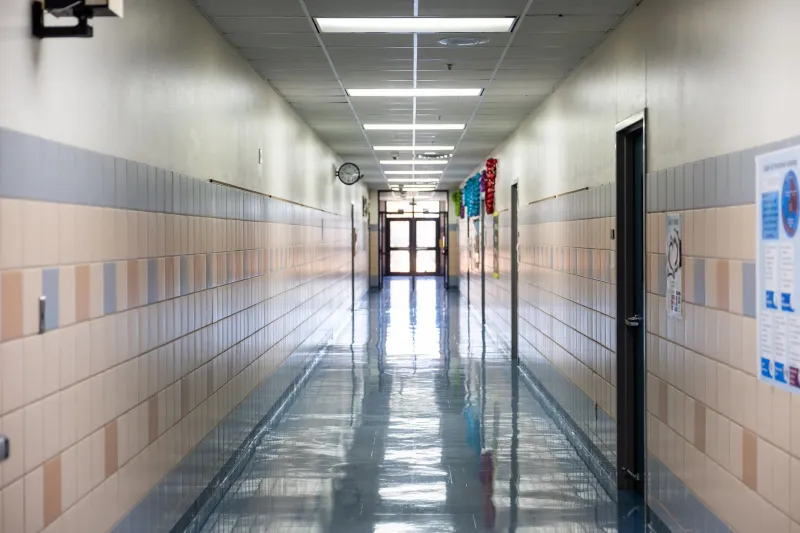
By the time the first school bus pulls up at seven-fifteen in the morning, Dale has already been inside the building for two hours. He has checked the boiler, cleared ice from the front steps, unlocked every exterior door, tested the gymnasium lights for the afternoon basketball game, and made a fresh pot of coffee that he will not have time to drink. He is the sole custodian for a K-12 school of eighty-four students in a town of fewer than four hundred people, and this is a light morning.
His name has been changed at his request. He worries that speaking publicly about the conditions of his work might embarrass the district or the community he genuinely loves. That instinct — to protect the institution even while quietly absorbing its burdens — is, according to those who study rural school staffing, characteristic of the people who take these jobs and stay in them.
The Invisible Infrastructure of Rural Schools
In Montana's small and rural school districts, the physical and social infrastructure of a school often rests on a remarkably small number of people. Superintendents serve simultaneously as principals. Teachers cover multiple grade levels or subject areas. Coaches are also bus drivers. And custodians — where the position still exists as a distinct role — are asked to perform a range of functions that would require several specialized employees in a larger, better-funded district.
The scope of what these workers actually do rarely appears in their official job descriptions. A custodian in a small Montana school may be responsible for routine cleaning and sanitation, yes, but also for basic plumbing and electrical repairs, snow removal, grounds maintenance, food service support, facility setup for community events, security checks after hours, and — in districts where the role has expanded informally over time — a kind of informal counseling presence for students who find it easier to talk to the person sweeping the hallway than to a teacher or administrator.
"Kids talk to me," said one custodian in a southwestern Montana district who has worked at the same school for nineteen years. "I don't know why, exactly. Maybe because I'm not grading them. Maybe because I'm just there, every day, doing the same thing. But I hear things that the counselor doesn't hear, and I've passed along more than a few concerns over the years."
School administrators across the state confirm this dynamic. Several described their custodial staff as an informal early-warning system for student distress — a function that became particularly visible during the pandemic years, when reduced in-person contact made every reliable adult relationship in a school building more precious.
When One Person Becomes the Department
The staffing pressures facing Montana's rural schools are well documented in aggregate but poorly understood in their day-to-day human dimensions. Statewide teacher shortages receive regular attention from legislators and education advocates. The parallel shortage of classified staff — custodians, paraprofessionals, food service workers, bus drivers — receives considerably less.
In a growing number of small Montana districts, custodial positions that were once filled by two or three employees are now managed by one, or have been consolidated with other roles in ways that strain the worker holding them. A custodian who is also responsible for food service support may find herself moving between kitchen duties and building maintenance across a single school day, with neither task receiving the attention it warrants.
The Montana Rural Education Association has flagged custodial staffing as a growing concern in its annual surveys of member districts, noting that vacancy rates for classified positions have increased significantly in recent years. The causes are familiar: wages that have not kept pace with the broader labor market, geographic isolation that limits the pool of available applicants, and a general undervaluing of the work that makes recruiting and retention difficult.
"We can't compete with what someone can earn at a warehouse job in Billings," said one district administrator in eastern Montana. "And we can't offer a commute that makes sense for someone who doesn't already live here. So we end up relying on people who are here because they care about the community, and then we ask more and more of them."
The School as Community Anchor
In many of Montana's smaller towns, the school building is the largest and most versatile public facility available. It hosts community meetings, election polling, emergency shelters during severe weather, and a range of events that have nothing directly to do with education. The custodian is, in practice, the facilities manager for all of these functions — responsible for setup, sanitation, and security whether the event is a school play or a county emergency management briefing.
This community role is rarely compensated or even formally acknowledged. It is simply absorbed into the job because the job is, in a small town, inseparable from the community.
"When there's a bad storm and the school becomes a warming shelter, I'm there," said one custodian in a northern Montana district near the Canadian border. "Not because anyone told me I had to be. Because who else is going to be there? It's my building."
That sense of ownership — of genuine investment in the school as a place and in the community it represents — is both the strength and the vulnerability of this workforce. It is the quality that keeps people in these positions through difficult conditions and inadequate compensation. It is also the quality that makes their departure, when it comes, so difficult to replace.
What Happens When They Leave
When a long-serving custodian retires from a small Montana school, the loss is rarely captured in any official measure of educational quality. Test scores do not reflect whether the boiler was properly maintained or whether a struggling student had a reliable adult to talk to between classes. Accreditation reviews do not assess the cleanliness of gymnasium bleachers or the condition of exterior doors in January.
But the people who work in these schools and the communities that surround them feel the absence immediately. Deferred maintenance accumulates. Informal support networks fray. The building itself begins to show the wear of insufficient attention.
For the workers themselves, the decision to leave — whether through retirement, burnout, or the simple economic necessity of finding better-paying work — is rarely made lightly. Many describe a genuine grief at the prospect of stepping away from a role that has defined their relationship to their community for years or decades.
"I've swept these same floors for twenty-two years," said one custodian preparing to retire from a small Hill County school. "I know every crack in the linoleum. I know which door sticks in the cold. I know which kids are having a rough week by the way they walk past me in the morning." He paused. "I don't know who's going to know all that after I'm gone."