Words That Were Almost Lost: Inside Montana's Effort to Bring Indigenous Languages Back Into the Classroom
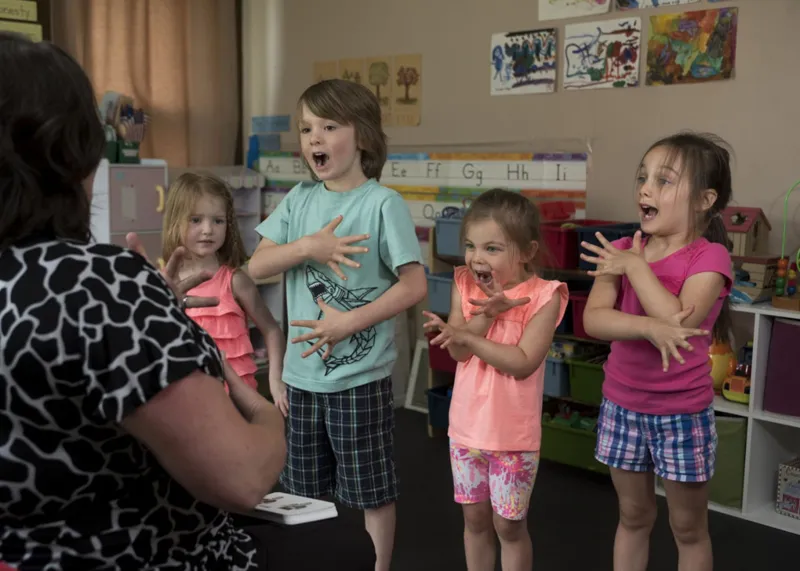
In a modular classroom on the Crow Reservation, a group of third-graders is learning the word for river. Their teacher, Loretta Bighorse, says it first in Crow, then writes it on the whiteboard in both scripts. The children repeat it together, and for a moment the room sounds different from any other public school classroom in Montana—older, somehow, and more grounded in the land outside the windows.
Bighorse has been teaching in Hardin and surrounding communities for nineteen years. She began incorporating Crow language instruction into her curriculum in 2016, initially without formal district support, relying on her own fluency and materials she developed at home after school hours. Today, her work is partially recognized by the district, though she still funds some of her own classroom resources.
Her situation is not unusual. Across Montana's seven reservations and in off-reservation communities with significant Indigenous populations, a loosely connected network of educators is doing some of the most consequential language work in the state—often with minimal institutional backing and against a demographic clock that grows more urgent each year.
A Constitutional Mandate, an Incomplete Reality
Montana is one of the few states in the country with a constitutional provision addressing Indigenous education. The 1972 Montana Constitution includes language recognizing the distinct cultural heritage of American Indians and directing the state to preserve their cultural integrity. That mandate was given more specific shape by the Indian Education for All Act, which requires Montana public schools to incorporate Native American history and culture into curricula across grade levels and subject areas.
In practice, implementation has been uneven at best.
A 2022 review by the Montana Office of Public Instruction found that while most districts had made some effort to incorporate Indian Education for All content, language instruction specifically remained a significant gap. Many schools satisfied the letter of the requirement through history lessons and cultural units while leaving Indigenous languages entirely out of the curriculum.
"The law says culture and heritage. Language is the core of both of those things," said Dr. Arlene Runningwater, a curriculum specialist who has worked with multiple tribal education departments across the state. "You cannot fully teach one without the other. But language is harder, more expensive, and requires specialized teachers. So it gets left out."
The Fluency Crisis
The urgency behind classroom language programs is driven by a stark demographic reality. Most of Montana's Indigenous languages are classified by linguists as endangered, with fluent native speakers concentrated overwhelmingly among older generations. Crow, Blackfoot, Assiniboine, Salish, Kootenai, Chippewa Cree, and Nakoda each face varying degrees of threat, but for all of them, the window for transmission from fluent elders to younger learners is narrowing.
The consequences of language loss extend beyond cultural sentiment. Researchers in linguistics and cognitive science have documented the ways in which language shapes thought, frames relationships to the natural world, and encodes knowledge that has no direct equivalent in English. When a language disappears, that knowledge framework disappears with it.
Tribal nations across Montana have responded with their own language preservation programs—immersion schools, elder recording projects, and community classes—but those efforts operate largely outside the public school system, reaching a fraction of the children who need them.
Bringing language instruction into public schools, where most Indigenous children in Montana are enrolled, remains the most direct path to scale. And that is where educators like Loretta Bighorse are doing their work.
Navigating the Institutional Maze
Teachers attempting to incorporate tribal language instruction into public school classrooms face a set of overlapping institutional challenges that can make the work feel like swimming upstream.
State certification requirements do not include a pathway specifically designed for Native language teachers. An elder fluent in Blackfoot who wishes to teach the language formally in a public school must navigate a credentialing system built around conventional academic preparation—a system that was not designed with Indigenous language transmission in mind and that can effectively exclude the most knowledgeable potential instructors.
Curriculum approval processes present a separate obstacle. Materials developed by tribal educators or language departments frequently must clear district review procedures that were designed for commercially produced textbooks and that can be slow, opaque, and occasionally dismissive of community-developed content.
Funding is a persistent constraint. Title VI federal funds, which support Indian education programs, can be used for language instruction, but competition for those dollars is intense and administrative requirements are burdensome for small programs. State funding specifically designated for Indigenous language instruction is limited.
"I've written the same grant three times," said Marcus Eagleheart, a Salish language teacher at a school in the Flathead Valley. "Each time the requirements change just enough that I have to start over. Meanwhile, the elders I'm working with are getting older."
What Progress Looks Like
Despite those barriers, there are genuine signs of forward movement.
The Blackfeet Nation has developed a structured Blackfoot language curriculum that is now being used in several classrooms on and near the Blackfeet Reservation. The Fort Peck Tribes have invested in a language nest program for young children that has shown measurable results in early language acquisition. In Billings, a growing population of urban Native students has prompted at least one district school to explore incorporating Crow and Assiniboine instruction into its programming.
Montana State University and the University of Montana have both expanded Indigenous language coursework at the collegiate level, creating a pipeline—thin, but real—of younger speakers who may eventually move into K-12 teaching roles.
The Office of Public Instruction has, in recent years, signaled greater interest in supporting tribal language efforts, though advocates note that signals and resources are different things.
"There's more goodwill now than there was ten years ago," said Dr. Runningwater. "But goodwill doesn't pay for curriculum development. It doesn't train teachers. It doesn't release elders from other obligations so they can spend time in classrooms."
The Stakes of the Work
For Loretta Bighorse, the stakes of language work are not abstract. She grew up hearing Crow spoken in her grandparents' home and watched the language recede through her parents' generation. She teaches it now because she believes that what her students learn in that modular classroom—those words for river, for mountain, for family—belongs to them in a way that no standardized curriculum can replicate.
"When a child says a word in our language, something happens," she said. "You can see it. They stand a little different. It connects them to something that was almost taken away completely."
The work of educators across Montana's reservations and tribal communities is, at its core, an act of recovery—an attempt to reclaim what boarding school policies and decades of institutional neglect nearly erased. Whether Montana's public school system will meet that work with the resources and structural reforms it requires remains an open and pressing question.