When the Sirens Stay Silent: Montana's Volunteer Fire Companies Struggle to Survive
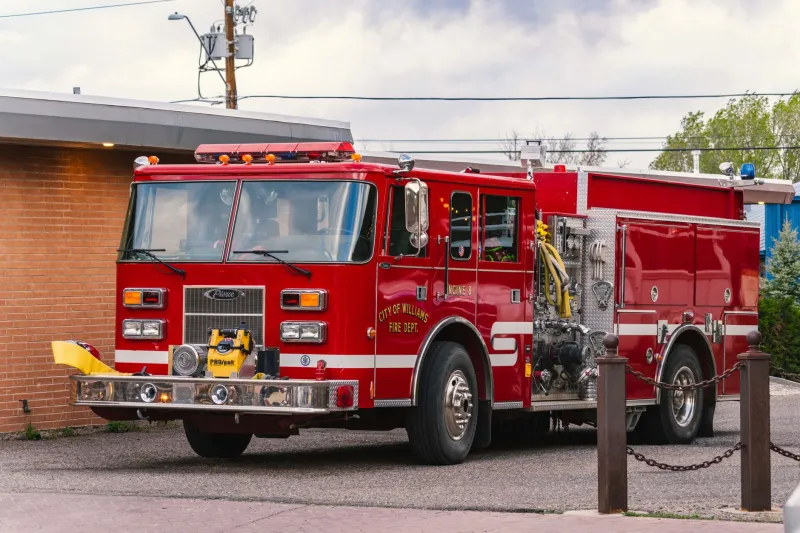
The tones dropped at 2:47 on a Tuesday afternoon in late August — a structure fire reported at a farmstead eight miles outside of Roundup. The Musselshell County dispatch logged the call. The pagers activated across a dozen households in town. And then the waiting began.
Of the eighteen people on the volunteer roster for that rural department, four were available to respond. The farm's main outbuilding was fully involved by the time the first engine arrived. The family's equipment — a tractor, a hay baler, a generator — was a total loss. No one was injured. But the department's incident commander, a retired school principal who has volunteered for twenty-seven years, stood in the driveway afterward and said something that stayed with the farmer whose property had just burned.
"He told me, 'We couldn't get people. We just couldn't get people.'" the farmer recalled. "That's not something you expect to hear."
Across Montana, that phrase is being repeated with increasing frequency. The volunteer fire service — which provides primary fire protection to the vast majority of the state's land area and a substantial portion of its population — is confronting a convergence of pressures that its members describe as the most serious threat to the system in living memory.
The Numbers Behind the Crisis
Montana has approximately 350 fire departments. Of those, the Montana State Fire Marshal's office estimates that roughly eighty percent rely entirely or primarily on unpaid volunteers. The state's paid and combination departments are concentrated in Billings, Missoula, Great Falls, Bozeman, and a handful of other population centers. Everywhere else, protection depends on neighbors showing up.
The national trend is well documented. The National Fire Protection Association has tracked a decades-long decline in volunteer firefighter numbers across the United States, from a peak of approximately 897,000 in 1984 to fewer than 676,000 in recent years. In rural states like Montana, that decline is not an abstraction — it translates directly into longer response times, reduced suppression capacity, and in some documented cases, the decision not to respond at all when available personnel fall below minimum safe deployment thresholds.
Montana does not maintain a centralized, publicly accessible database of volunteer roster levels or response capability by department. Requests submitted by Montana's News to the State Fire Marshal's office for county-level staffing data produced partial responses, with officials noting that reporting by rural departments is inconsistent and that no comprehensive real-time picture of statewide volunteer capacity exists.
What is available, through interviews with department chiefs, county commissioners, and fire service organizations across the state, suggests the problem is both widespread and worsening.
Why Volunteers Are Leaving — and Not Being Replaced
The reasons for declining volunteer numbers are not mysterious, and they are not unique to Montana. But the state's particular economic and demographic conditions give those reasons added force.
The most commonly cited factor is time. Volunteer firefighting is not a casual commitment. Initial certification requires between 100 and 200 hours of training depending on the level sought. Ongoing recertification, department drills, equipment maintenance, and administrative duties add further demands. For a person working a salaried job in a city, those hours are challenging to manage. For a person working two jobs in a rural Montana community where the nearest large employer may be forty miles away — or for a farmer or rancher during planting or calving season — they can be effectively impossible.
Employer accommodation is a persistent and underappreciated obstacle. Federal law provides some protections for volunteer emergency responders, but enforcement is inconsistent, and in small communities where employment options are limited, workers are often reluctant to test those protections. Department chiefs in Petroleum, Carter, and Treasure counties all described situations in which volunteers had quietly stepped back from active status after receiving pressure from employers following daytime call responses.
The demographic dimension compounds everything. Montana's rural communities are older, on average, than they were twenty years ago. The young people who might otherwise form the next generation of volunteer firefighters are, in many cases, the same young people profiled in previous reporting on rural youth departure. When they leave for Billings or Bozeman or out of state entirely, they take their potential service with them.
Funding Gaps That Equipment Can't Bridge
Volunteer departments operate on budgets that would be considered inadequate for a small-town parks department. A review of county budget documents from a dozen rural Montana counties found fire department allocations ranging from approximately $12,000 to $85,000 annually — sums that must cover equipment maintenance, fuel, insurance, training costs, and in some cases the lease or mortgage on a fire station building.
The equipment itself is aging. A fire engine has a functional service life of roughly twenty to twenty-five years under normal use conditions. In rural departments where replacement funding is not available, engines are kept in service well beyond that threshold. The Montana Fire Chiefs Association has identified equipment age as one of the most acute capital needs facing rural departments, but the association's advocacy has not yet produced a dedicated state funding stream to address it.
Federal assistance is available through the FEMA Assistance to Firefighters Grant program and related mechanisms, but the application process is administratively demanding — a significant barrier for departments that may have no paid staff and whose chief is a rancher who volunteers his time between feeding cattle and running a household.
"I spent thirty hours on one grant application last winter," said the chief of a department in Chouteau County, who asked that his name not be used to avoid creating friction with neighboring departments competing for the same funds. "Thirty hours I didn't have. And we didn't get it."
Response Time and the Question No One Wants to Answer
The metric that matters most in a structure fire is time. Every minute between ignition and suppression increases property loss and, more critically, risk to life. The standard used by the National Fire Protection Association calls for a first-arriving engine to reach the scene within four minutes of dispatch in urban settings — a standard that is essentially irrelevant to rural Montana, where response distances alone make such benchmarks unachievable.
What matters in rural settings is that a response occurs at all, and that it occurs with enough personnel to conduct safe operations. The Occupational Safety and Health Administration's "two-in, two-out" rule requires that firefighters not enter a burning structure until at least four personnel are on scene. Departments that cannot muster four responders cannot legally send anyone inside — meaning that in some situations, crews can only watch and protect exposures while a building burns.
Department chiefs across the state confirmed that this scenario — arriving with insufficient personnel for interior attack — is occurring with greater frequency. None were willing to provide specific incident data on the record, citing concerns about liability and community anxiety. But the pattern emerged clearly enough across multiple independent conversations to constitute a documented trend.
What Might Change — and What Probably Won't
The Montana Legislature's 2023 session included discussion of a rural fire protection study, and the Montana Department of Natural Resources and Conservation has ongoing programs supporting fire preparedness at the county level. Several departments have experimented with paid-on-call hybrid models, in which volunteers receive modest compensation per response rather than serving entirely without pay.
Those experiments have shown some promise in retaining members who might otherwise step away, but the funding to sustain them is not reliably available. State appropriations for rural fire support have not kept pace with the scale of the need, and county governments operating on thin property tax bases have limited capacity to make up the difference.
For the incident commander in Roundup who stood in a farmer's driveway and said he couldn't get people — a man who has given nearly three decades of his own time to this work — the policy conversation is secondary to a simpler and more urgent question.
"Someone has to decide that this matters," he said. "Not in a speech. Not in a committee hearing. Someone has to actually fund it. Because right now, in a lot of places in this state, if your house catches fire, you are hoping and praying that enough of your neighbors happen to be home."