Riding the Ditches: The Unsung Water Masters Keeping Montana's Farms Alive
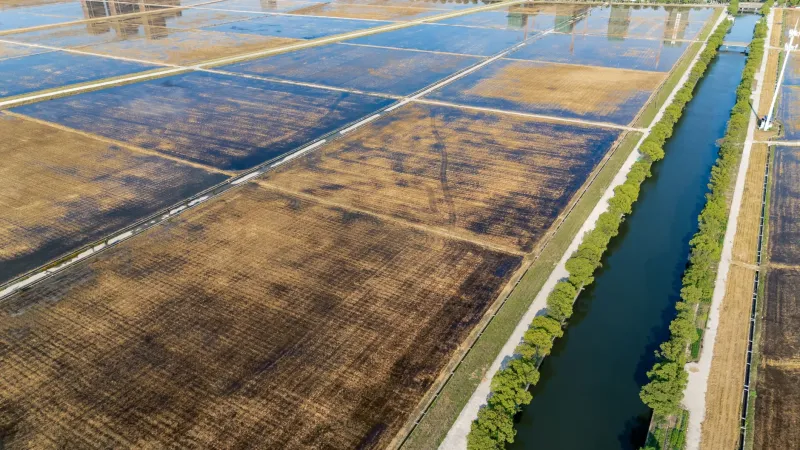
The alarm goes off at four-thirty. By five, Gary Tresvik is already in his truck, headlights cutting through the pre-dawn dark along a gravel road that borders the main canal of the Musselshell Valley Irrigation District. He will drive this route twice today—once in the early morning, once in the late afternoon—checking gates, measuring flows, and making the dozens of small adjustments that determine how much water reaches which field and when.
Tresvik has been a ditch rider for twenty-two years. He carries in his head a working map of roughly forty miles of primary and secondary canals, the behavior of each headgate under different flow conditions, and the water rights of more than sixty individual irrigators whose fields draw from the system he tends. He is not a hydrologist. He does not hold an engineering degree. What he holds is something harder to credential: a deep, practiced understanding of how water moves through a particular landscape, accumulated through two decades of daily observation.
"The ditch doesn't care what the calendar says," Tresvik said one morning last June, pulling over to adjust a wooden headgate that had shifted in the night. "It cares about what the snowpack was, what the soil is doing, and what the weather's going to be for the next three days. That's what I'm thinking about, all the time."
A System Built by Hand
Montana's agricultural irrigation infrastructure is, by the standards of modern engineering, ancient. The state's network of irrigation ditches, canals, and laterals was constructed largely between the 1880s and the 1930s, much of it dug by hand or with horse-drawn equipment by homesteaders, railroad-affiliated land companies, and early federal reclamation projects. The system was designed for a specific set of conditions: reliable snowpack in the mountain ranges, predictable spring runoff, and a growing season that matched the rhythms of the water supply.
Today, that network irrigates roughly 2.3 million acres of Montana farmland, supporting the production of hay, grain, sugar beets, and a range of other crops that form the backbone of the state's agricultural economy. The water that moves through those canals is governed by an intricate web of prior appropriation water rights—the legal framework that determines, in order of historical priority, who gets water and how much.
Administering that system on the ground is the job of ditch riders and water masters, titles that have changed little in a hundred years even as the work itself has grown more complex.
The Knowledge Behind the Gate
Visitors to Montana's irrigated valleys often notice the canals without registering their significance. They appear to be simple earthen channels running alongside fields and roads, unremarkable against the broader landscape. What they do not reveal is the intricate logic governing every drop of water that moves through them.
Water rights in Montana operate on a strict seniority basis. In times of shortage—which is to say, in most summers—irrigators with older, more senior water rights are entitled to their full allocation before any water flows to junior rights holders. Managing that distribution fairly and accurately, in real time, across dozens of miles of interconnected canals, requires a level of practical expertise that takes years to develop.
"You have to know the lag time," explained Darlene Petrich, who serves as water master for a district in the Milk River drainage. "When I open a gate up here, it takes four hours for that water to reach the field at the end of the lateral. If I'm adjusting for a shortage, I have to think four hours ahead. And I have to do that for every gate, simultaneously."
Petrich manages her district with the help of a single assistant and a set of tools that would be familiar to anyone who worked the ditches in 1945: staff gauges, flow calculation tables, and a logbook she fills in by hand each evening. Some districts have installed automated sensors and remote monitoring equipment, but manual oversight remains essential, particularly when equipment malfunctions or when conditions change faster than sensors can report.
Climate and the Narrowing Margin
For most of its history, Montana's irrigation infrastructure operated within a relatively predictable hydrological envelope. Snowpack accumulated through winter, melted gradually through spring and early summer, and fed the canals during the peak irrigation season. That predictability was never perfect, but it was sufficient to support a stable agricultural system.
That envelope is narrowing.
Over the past two decades, Montana has experienced a pattern of earlier snowmelt, reduced peak runoff, and more frequent summer drought conditions. The 2021 drought—among the most severe on record—forced widespread curtailments across the state's river basins, leaving junior water rights holders with little or no allocation for extended periods. Several irrigation districts reported their worst water years in living memory.
"The system was designed for a certain amount of water arriving at a certain time," said a hydrologist with the Montana Department of Natural Resources and Conservation who has worked with irrigation districts on water planning. "We're increasingly seeing less water arriving earlier. The infrastructure hasn't changed, but the conditions it was built for are shifting underneath it."
For ditch riders, those shifts translate into more frequent and more consequential decisions. Shortage conditions require constant recalculation, more frequent gate adjustments, and difficult conversations with irrigators who may face the prospect of watching crops fail for lack of water they are legally entitled to but physically cannot receive.
"You try to be fair," said Tresvik. "But fair doesn't always feel like enough when someone's hay field is burning up."
A Workforce With No Clear Successor
Like many of Montana's essential rural trades, ditch riding faces a workforce challenge that compounds its other difficulties. The majority of working ditch riders and water masters across the state are over fifty years old. Recruitment is hampered by salaries that often fall below what comparable physical labor commands in other sectors, by the irregular hours the job demands during irrigation season, and by the years of on-the-job learning required before a new rider can work independently.
Few formal training programs exist. The knowledge that Tresvik and Petrich carry is transferred primarily through apprenticeship—working alongside an experienced rider for one or more full seasons before taking on independent responsibility. That model depends on experienced riders being available and willing to mentor, conditions that are not guaranteed as retirements accelerate.
Some irrigation districts have begun exploring technological tools—automated gates, satellite soil moisture monitoring, advanced flow sensors—that could reduce the labor required for routine monitoring. But most experienced water managers are cautious about what technology can replace.
"A sensor tells you what's happening right now at one point," Petrich said. "It doesn't tell you why it's happening or what you should do about it. That's still a human judgment."
Water and What It Means
In the late afternoon, Gary Tresvik makes his second pass along the canal. The light is different now—lower, warmer—and the water running through the main channel catches it in a way that makes the ditch look almost decorative rather than functional. He stops the truck, gets out, and stands at the bank for a moment, watching the flow.
He is calculating, even in the stillness. Estimating whether the volume is consistent with what he set this morning. Checking the color of the water for signs of turbidity that might indicate a bank failure upstream. Listening, in some way that he cannot fully articulate, to what the ditch is telling him.
The water that passes this point tonight will be on someone's field by morning. Whether it arrives in the right quantity, at the right time, to the right place—that is Gary Tresvik's responsibility, as it was the responsibility of the man who held this job before him, and the man before that.
Montana's farms depend on that continuity. Whether the next generation of riders is ready to carry it forward is a question the state has not yet answered.